How to Remove Stains from a Leather Chesterfield Sofa Safely (UK Guide)
How to Safely Remove Stains from a Leather Chesterfield Sofa (Without Ruining the Finish)
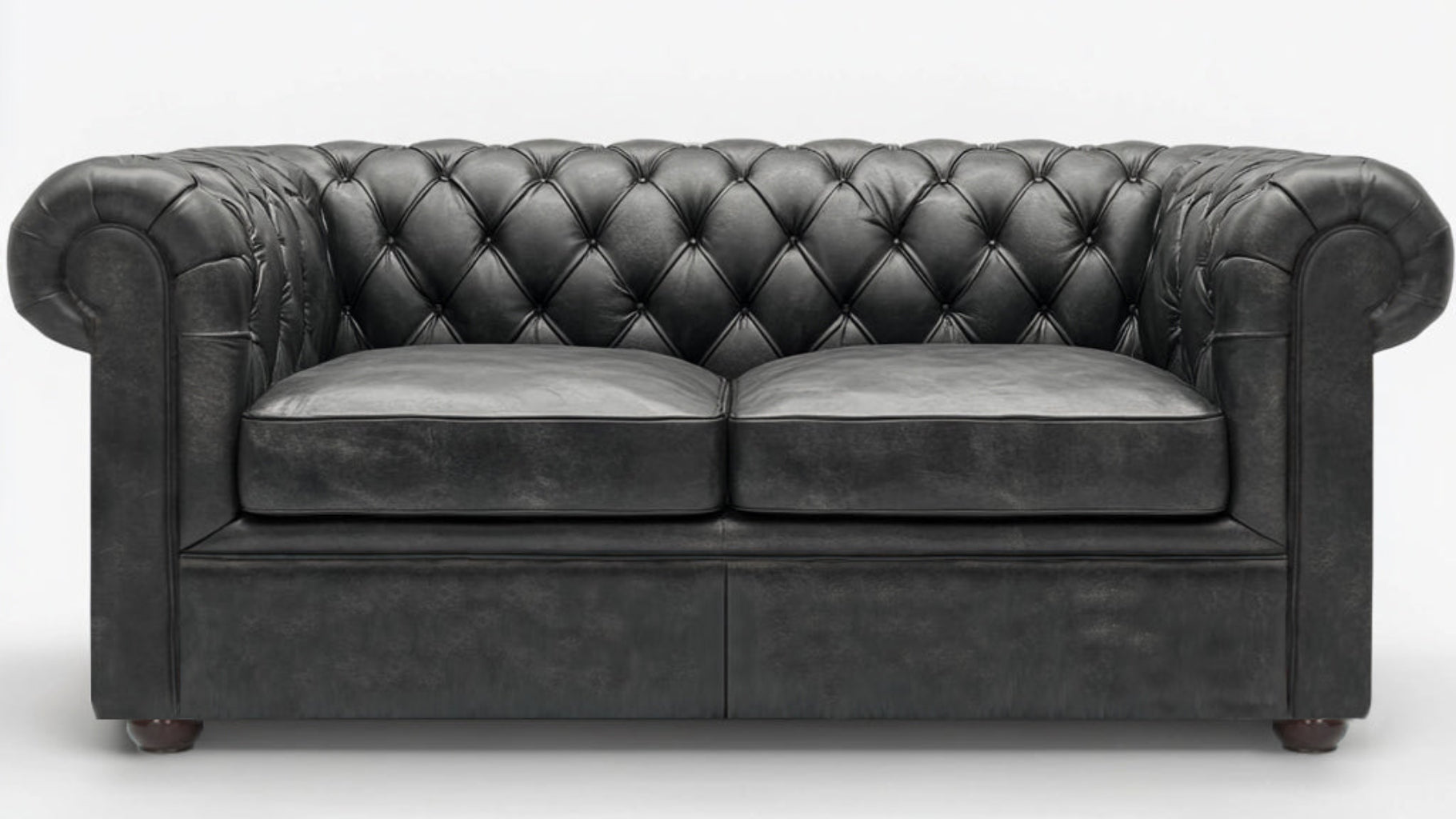
Leather Chesterfield sofas are built to last, and 80% of Chesterfield owners keep theirs for over 20 years. That longevity only holds if we treat the leather correctly. In this guide, we share a conservative, safety‑first approach to remove stains from a leather Chesterfield sofa while protecting both its colour and its finish, so your piece from brands like Luxury Furniture Collection can continue to age gracefully rather than prematurely wear.
Key Takeaways
| Common Question | Concise Answer |
|---|---|
| How do I safely remove stains from a leather Chesterfield sofa? | Always start with a dry, soft cloth, then use slightly damp cloth and a dedicated leather cleaner if needed. Work gently, in small areas, and dry immediately. |
| Does leather type matter (aniline vs pigmented)? | Yes. Aniline is more absorbent and delicate; keep to the mildest methods and call a professional for serious stains. Pigmented leather is more forgiving. |
| Can I fix colour transfer on a leather sofa myself? | Light, fresh colour transfer leather sofa marks may improve with a specialist cleaner, but deep dye transfer often needs a professional refinisher. |
| What removes a water spot on a leather sofa? | Even out the moisture by gently re‑dampening a wider area with clean water, then drying slowly. Never soak the leather. |
| What should I never use on a leather sofa? | Abrasive pads, bleach, household degreasers, window cleaner, baby wipes, magic erasers, and undiluted vinegar or alcohol can all damage leather. |
| Where can I find British leather Chesterfields designed for long‑term care? | Consider curated ranges such as the Leather Chesterfield Sofas collection from Luxury Furniture Collection, which are built with maintenance in mind. |
| When should I call a professional? | Whenever colour lifts on a patch test, the stain is large or old, or the leather is aniline and the mark is more than a light surface blemish. |
1. Know Your Leather: Aniline vs Pigmented Before You Clean
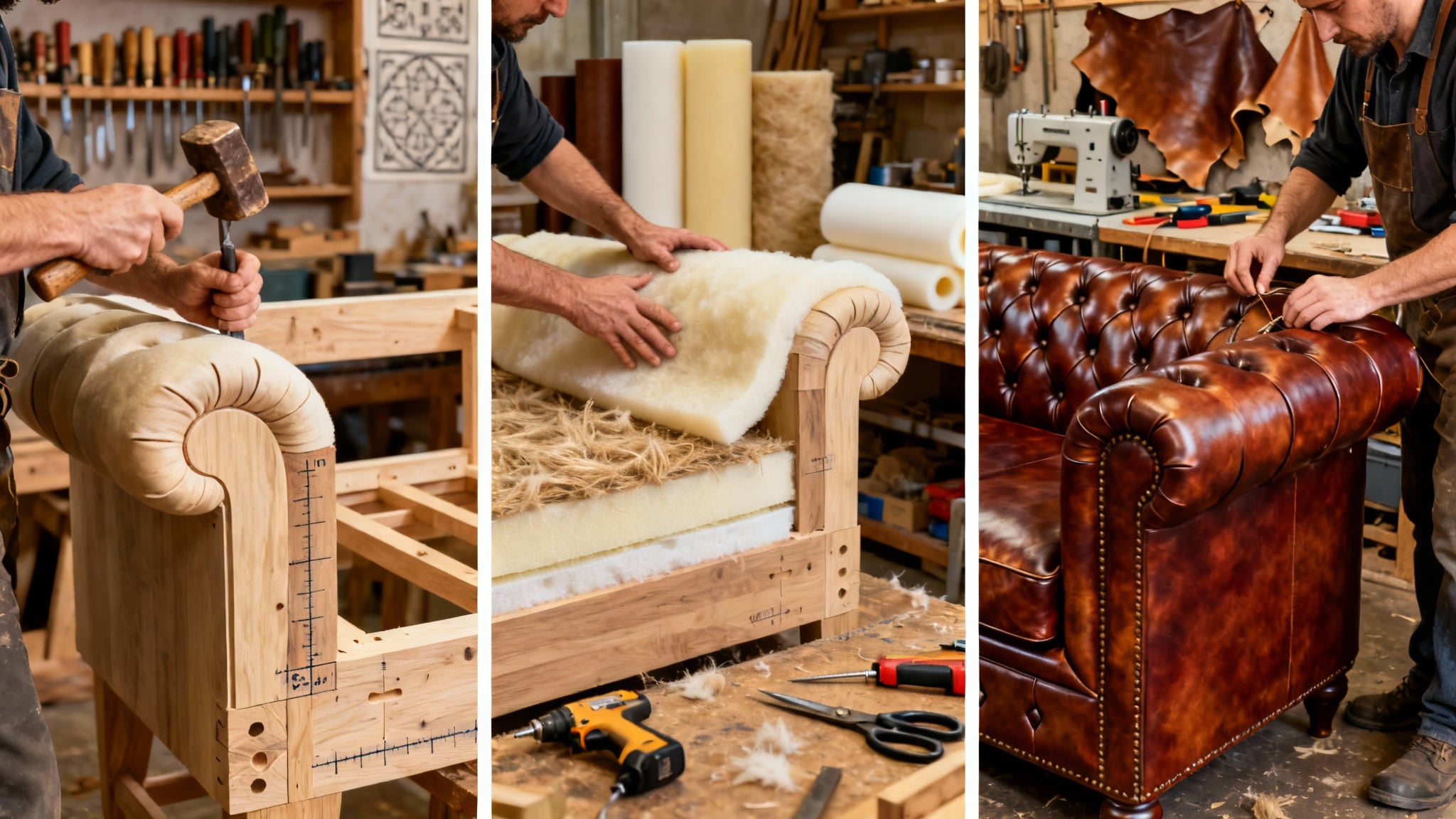
Before you try to remove stains from a leather Chesterfield sofa, you need to understand what type of leather you are working with. Many British Chesterfields, including those from Luxury Furniture Collection, use high‑quality full‑grain hides, but the surface finish can differ considerably. Aniline leather has minimal coating and shows natural variations, giving it a soft, luxurious hand feel. It is beautiful but highly absorbent, so we treat it with extra caution and avoid anything more aggressive than a manufacturer‑approved product. Pigmented (or protected) leather has a light colour coating and clear finish on top, making it more resistant to spills and daily wear.
How to quickly identify your leather type
- Visual clues: Aniline looks very natural and slightly matt with visible shade variations; pigmented leather appears more uniform and consistent.
- Touch: Aniline often feels warmer and more “buttery”; pigmented finishes can feel a little smoother or more coated.
- Absorbency test (only if approved in your care booklet): Place a single tiny drop of water in an inconspicuous area. If it darkens quickly, it is likely aniline. Dab off immediately.
If in doubt, assume your sofa is more delicate (similar to aniline) and follow the gentlest possible method, or contact your retailer for confirmation.
2. Essential Safety Steps: Patch Tests, Colour Lift, and When to Stop
Taking a safety‑first approach is critical with any British leather Chesterfield. The aim is to improve the mark without compromising the finish, stitching, or underlying hide.
Patch testing correctly
Always patch test before you try to remove stains from a leather Chesterfield sofa:
- Choose a hidden area (back panel near the floor or under a loose cushion).
- Apply your chosen cleaner or method in a very small area.
- Blot gently and allow to dry fully.
- Compare with surrounding leather in natural light.
If you see darkening, stickiness, dull patches, or any colour change, stop immediately. Do not proceed on the visible parts of the sofa.
When to call a professional
We recommend contacting a professional leather technician or your retailer if:
- Colour lifts onto your cloth during a patch test.
- The stain covers a large area or has been there for several weeks.
- The leather is aniline and the stain is more than a slight surface mark.
- There is damage from ink, oil, or dye that has deeply penetrated.
For heritage pieces, such as British‑made Chesterfields designed to last decades, professional intervention can save considerable cost and preserve value over time.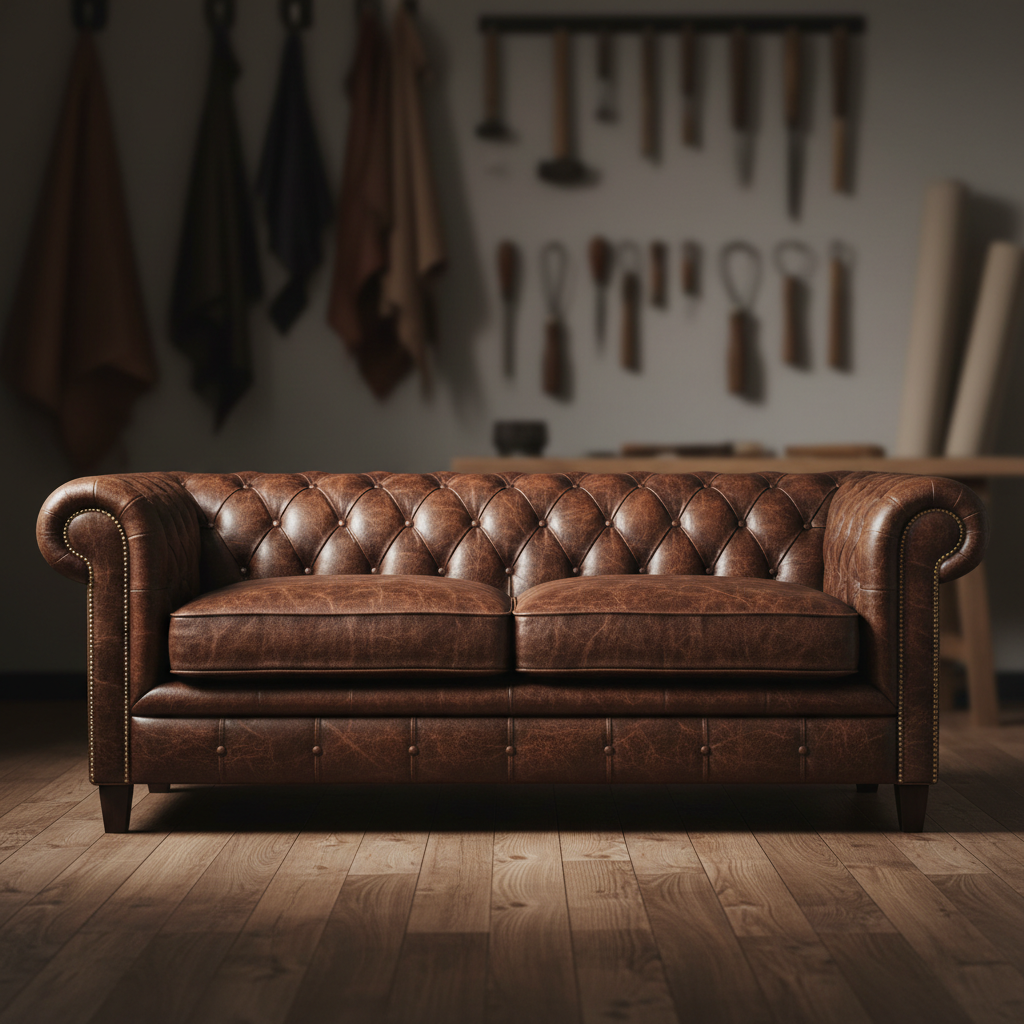

3. General Routine: Everyday Marks and Light Surface Dirt
Every sofa picks up dust, light grime, and the occasional scuff. Keeping on top of these minor marks reduces the risk of permanent staining and colour build‑up.
Gentlest‑first cleaning method
For both aniline and pigmented leathers, start with:
- Dry dust: Use a soft, lint‑free cloth or a vacuum with a soft brush attachment to remove dust and crumbs from the surface and crevices.
- Slightly damp cloth: Lightly moisten a clean cloth with distilled water (never wet). Wring thoroughly so it is almost dry, then wipe gently in small sections.
- Drying: Immediately follow with a dry cloth to remove surface moisture.
- Condition (if recommended): Use a manufacturer‑approved leather conditioner according to instructions, typically a few times per year.
Avoid circular scrubbing, which can leave tide marks, especially on aniline leather. Work in gentle, straight motions and take your time.
Extra care on aniline leather
On aniline finishes, we avoid household soaps and generic wipes. Where a dedicated leather cleaner is recommended by your retailer, use the smallest amount possible, applied to a cloth rather than directly on the sofa, and always follow with a dry cloth.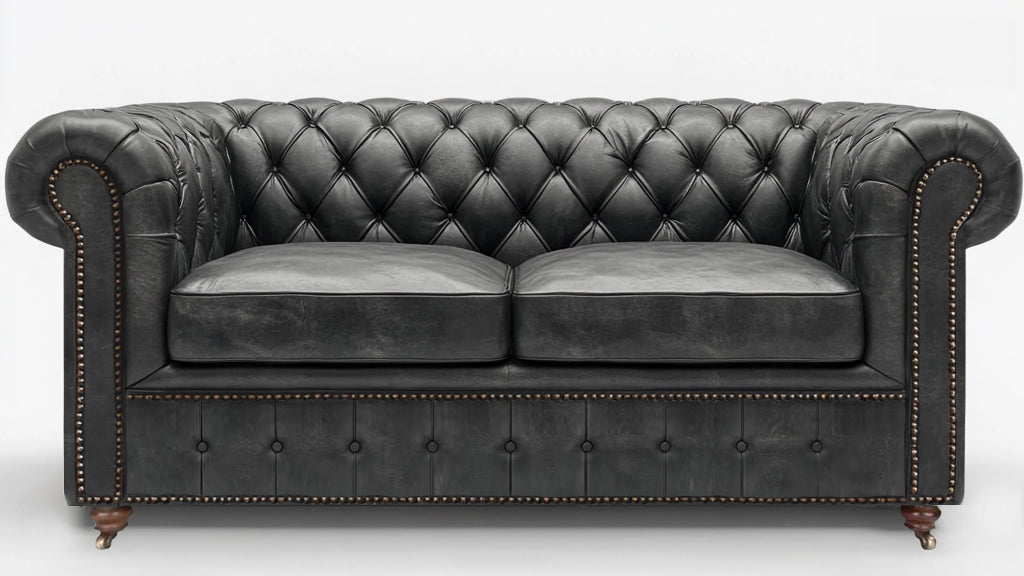
4. Water Spots on Leather Sofas: How to Even Out the Mark Safely
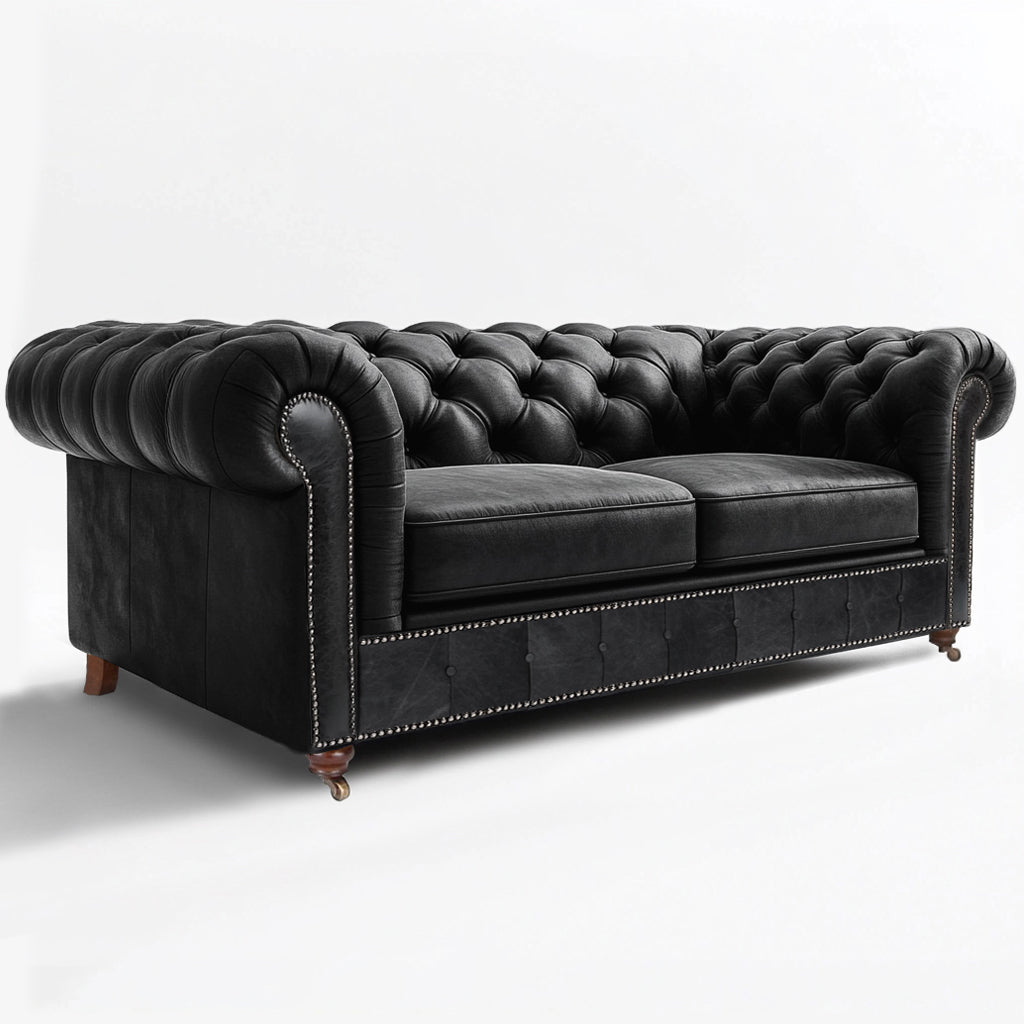
A common worry is a water spot leather sofa mark after a spill or from someone sitting down with damp clothing. Water can create a darker patch as it momentarily displaces the leather’s natural oils.
For pigmented leather
Use this gentle, staged approach:
- Blot, do not rub: If the water is fresh, press a dry, absorbent cloth over the area to remove as much as possible.
- Even re‑dampening: Lightly dampen a clean cloth with distilled water. Gently moisten the wider panel around the spot so moisture is distributed more evenly.
- Allow to dry naturally: Let the leather dry at room temperature. Avoid heat sources and direct sunlight.
- Assess: If a faint ring remains, repeat the process once more. Do not overwork the same area.
For aniline leather
With aniline, we are more cautious:
- Blot immediately and allow the area to dry undisturbed.
- Avoid repeated wetting; this can enlarge the mark.
- If the spot remains obvious once fully dry, consult a professional, as colour re‑balancing may be needed.
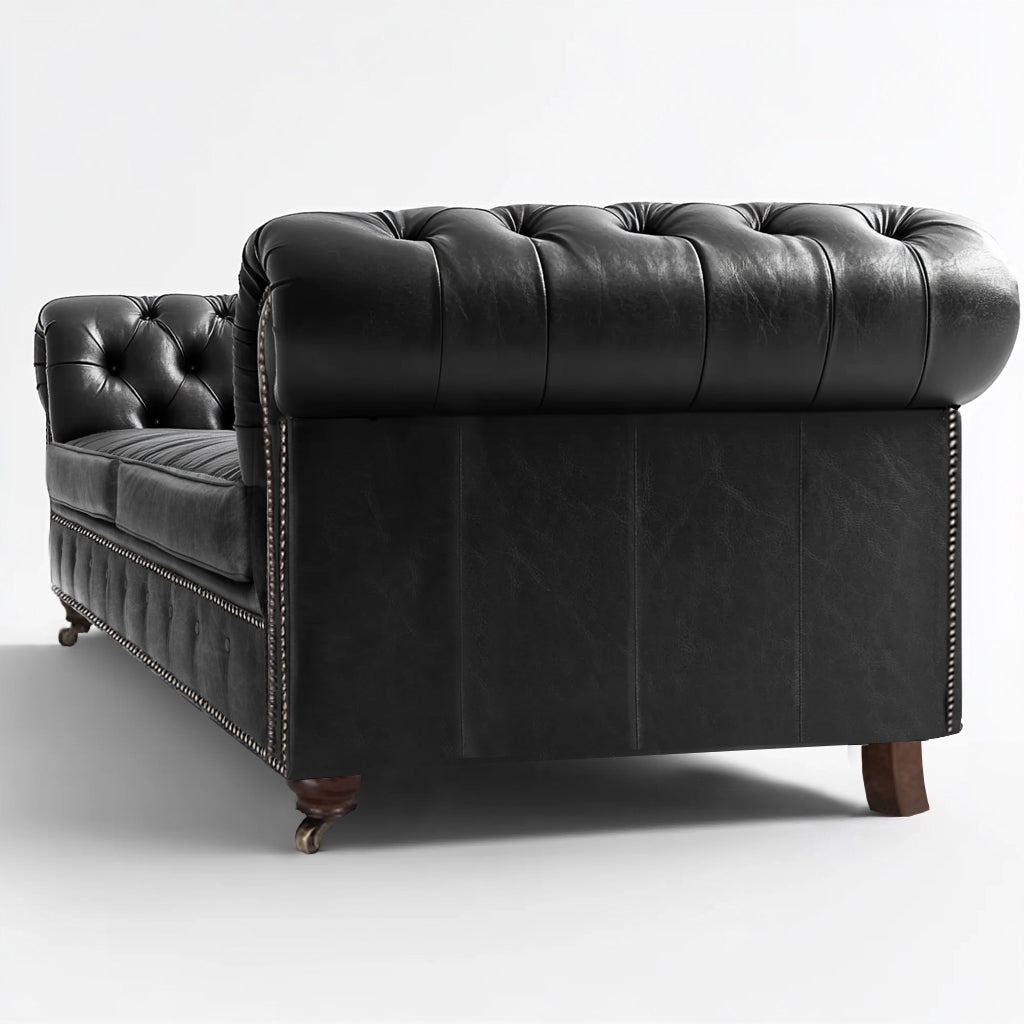
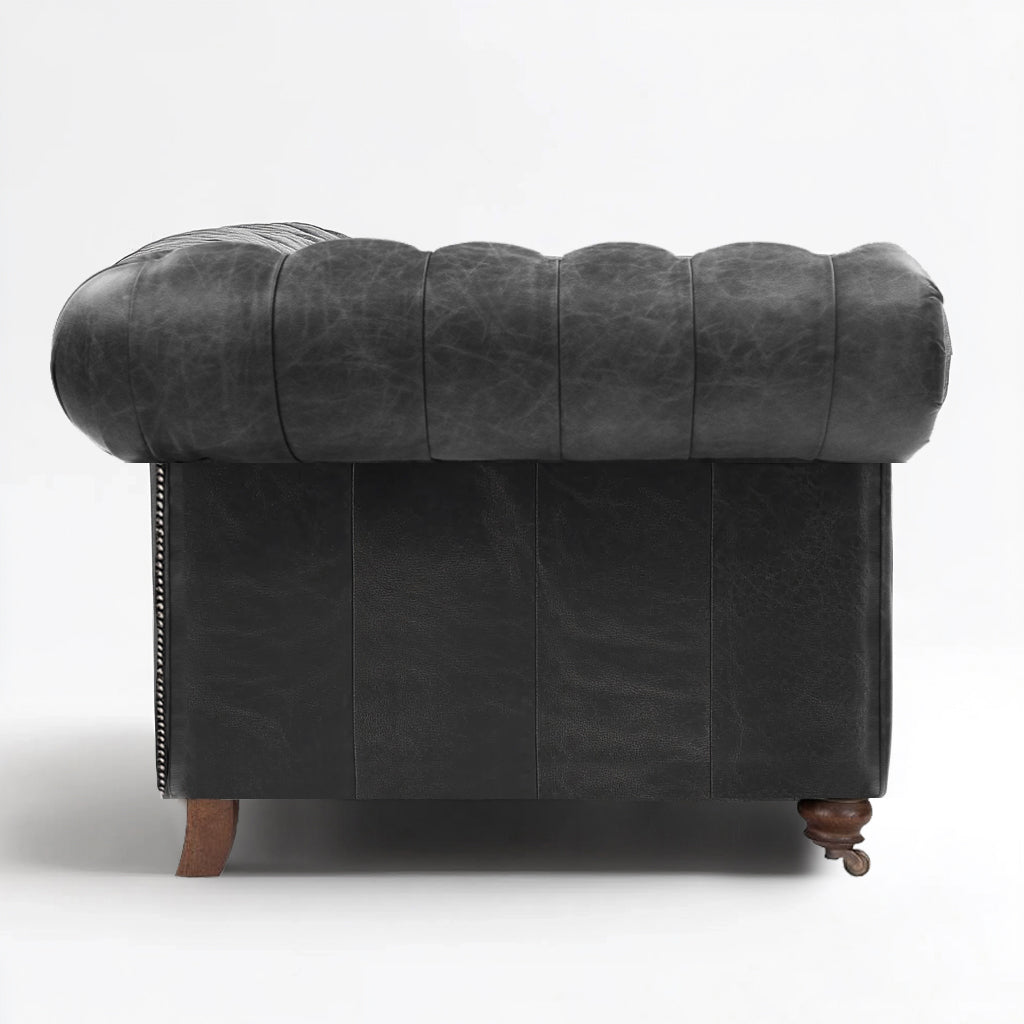
5. Grease and Oil: Treating a Grease Stain on a Leather Sofa
A grease stain leather sofa issue often comes from food, hand creams, or hair products touching the leather. Oil behaves differently from water and needs a different approach.
Grease stain removal for pigmented leather
Follow a controlled method:
- Blot excess: Use a dry cloth to lift any surface residue. Do not press hard, as you could push the grease deeper.
- Absorbent pause: Some owners lightly lay plain, unprinted tissue over fresh grease for a few minutes to absorb surface oil, then remove carefully.
- Mild cleaner: If your care instructions allow, use a dedicated leather cleaner suitable for pigmented leather. Apply a very small amount to a cloth and work gently from the outside of the mark inward.
- Dry and reassess: Wipe with a clean, dry cloth and inspect once fully dry. Repeat once if there is visible improvement.
Grease on aniline leather
Aniline hides can sometimes allow light oil marks to soften and blend naturally over time as the leather develops patina. For this reason:
- Blot gently and avoid aggressive treatment.
- Do not use kitchen degreasers, strong soaps, or abrasive powders.
- Consult a leather specialist if the mark is large, dark, or on a prominent area (seat cushions, arm tops).
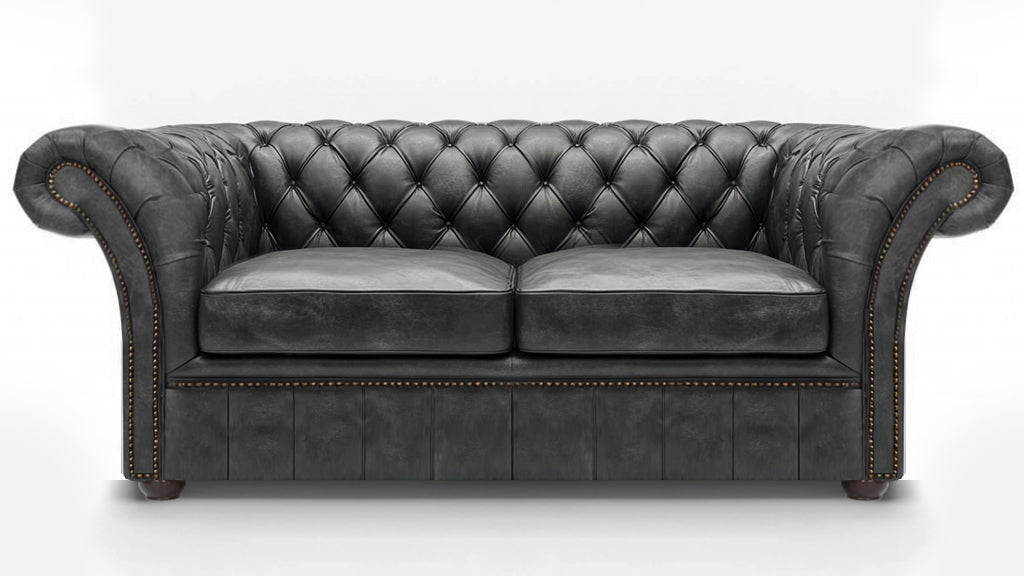
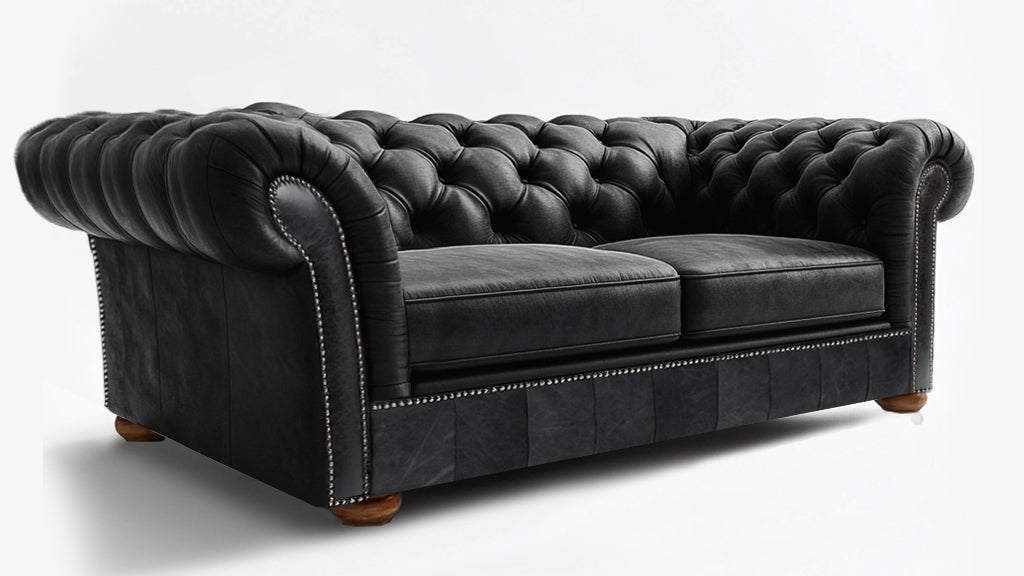
6. Ink Stains on Leather: A Conservative, Damage‑Limiting Approach
An ink stain leather sofa can be particularly challenging. Ballpoint pens, markers, and felt‑tips contain pigments or dyes that can bind strongly to leather finishes.
Immediate steps (first 24 hours)
If the ink is fresh:
- Do not rub: Rubbing spreads the ink and drives it deeper into the grain.
- Blot the surface: Lightly touch the area with a clean, dry, white cloth to lift any ink sitting on top of the finish.
- Check care guidance: Some manufacturers provide a specific ink‑removal product; use only if explicitly stated as safe.
Why to avoid strong chemicals
You may see advice online recommending alcohol, nail varnish remover, hairspray, or other harsh solvents. On a British leather Chesterfield, especially one with a nuanced finish like cracked wax or heritage patina, these products can:
- Strip the protective topcoat and leave a dull patch.
- Cause colour lifting far beyond the original ink mark.
- Weaken stitching or dry out the hide.
We advise contacting a professional leather technician for all but the faintest ink marks, particularly on aniline leather. They can often reduce or recolour the area with specialist products and techniques without leaving a visible repair.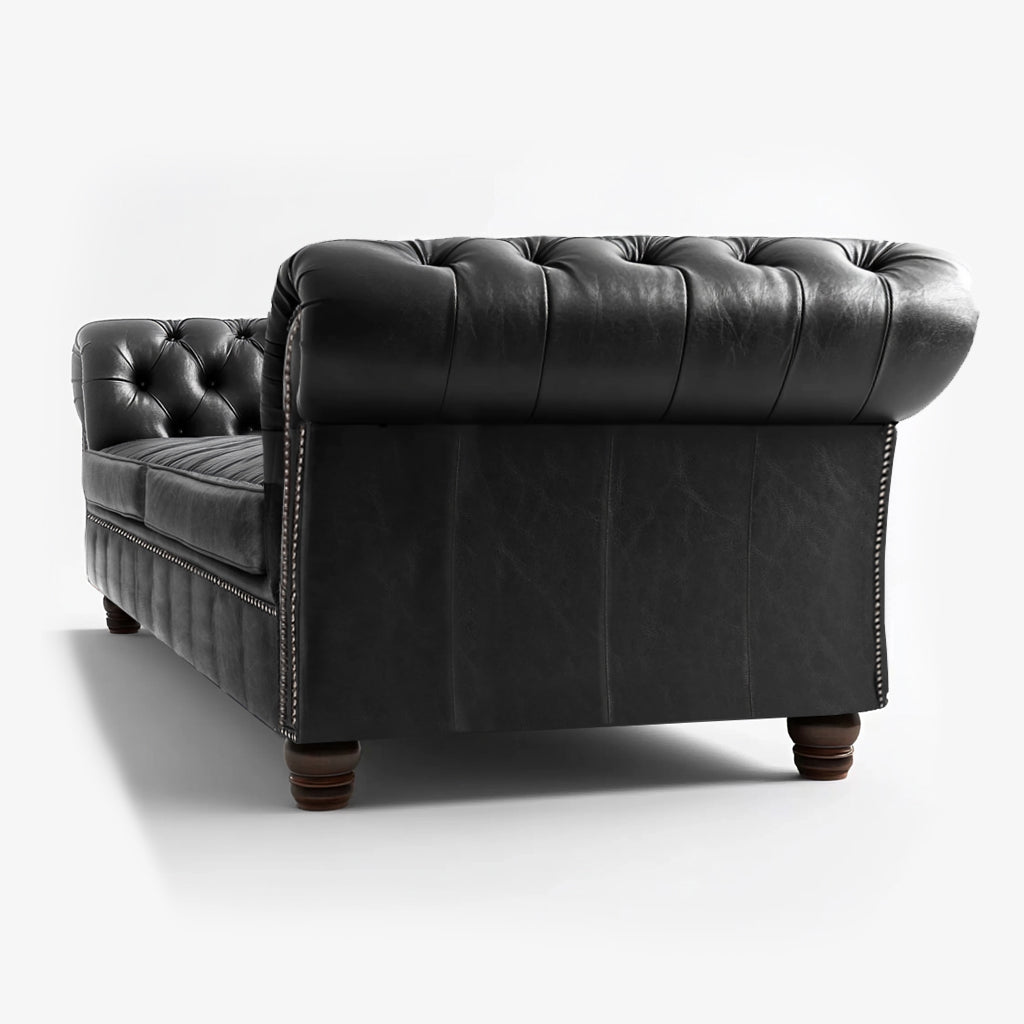
7. Colour Transfer: Dye from Clothing and Cushions on Leather
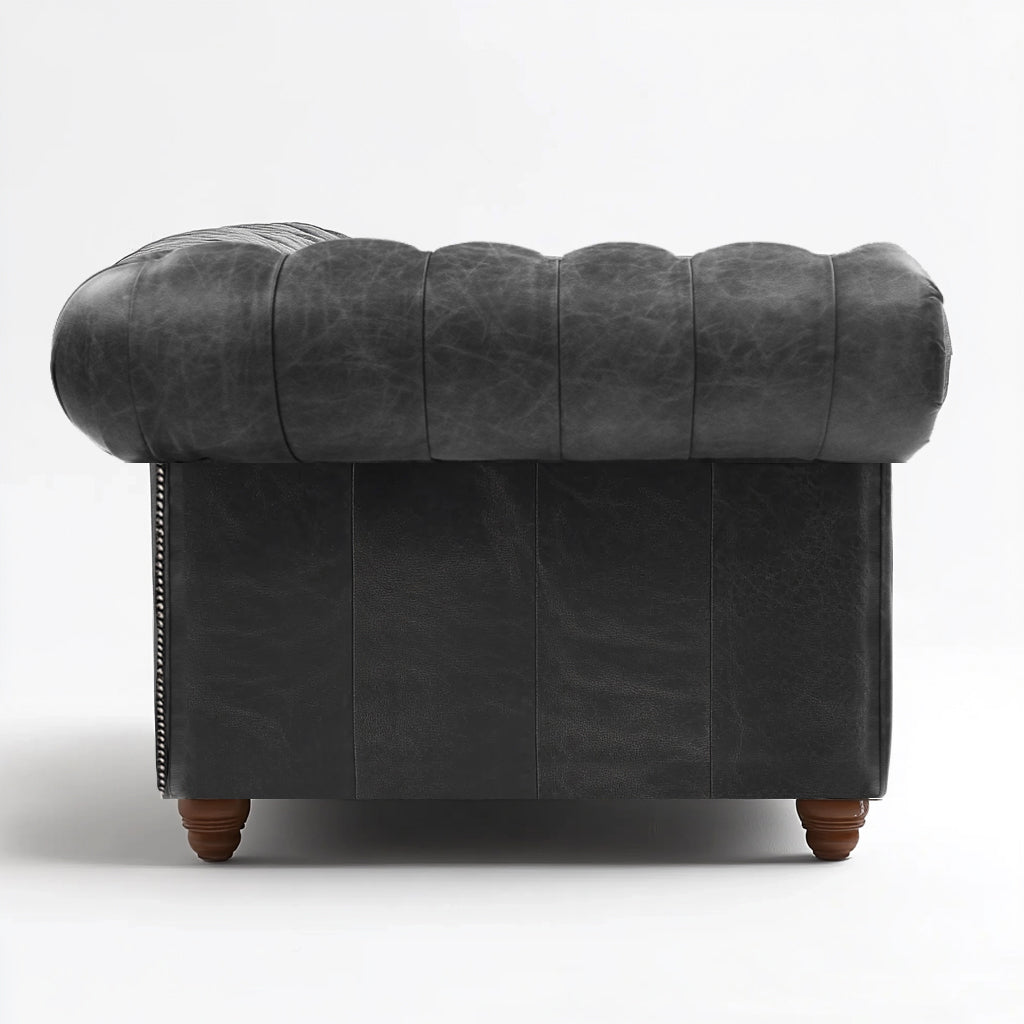
Dark denim, unfastened leather belts, and strongly dyed cushions can sometimes cause colour transfer leather sofa staining, especially on light‑coloured leather. This is not dirt sitting on top; it is dye migrating into the finish.
Gentlest possible method
For pigmented leather and very light, fresh transfer:
- Dry cloth first: Gently buff the area with a soft white cloth to see if any colour lifts.
- Approved cleaner: If your sofa’s care kit includes a protector or mild cleaner designed to reduce dye transfer, apply sparingly to a cloth and work in small, controlled movements.
- Neutralise and dry: Wipe with a separate, slightly damp cloth (distilled water) and immediately dry with a third cloth.
If nothing lifts within one or two conservative attempts, stop. Overworking the area may cause more visible damage than the original transfer.
Colour transfer on aniline leather
On aniline leather, colour transfer is extremely difficult to remove safely at home, because the dye tends to migrate into the open pores of the hide. In these cases:
- Avoid repeated cleaning attempts.
- Contact a professional who can assess whether local recolouring is possible.
- Consider preventive measures such as pre‑washing dark textiles and using throws that are colourfast.
8. What Not to Use on a Leather Sofa (And Why)
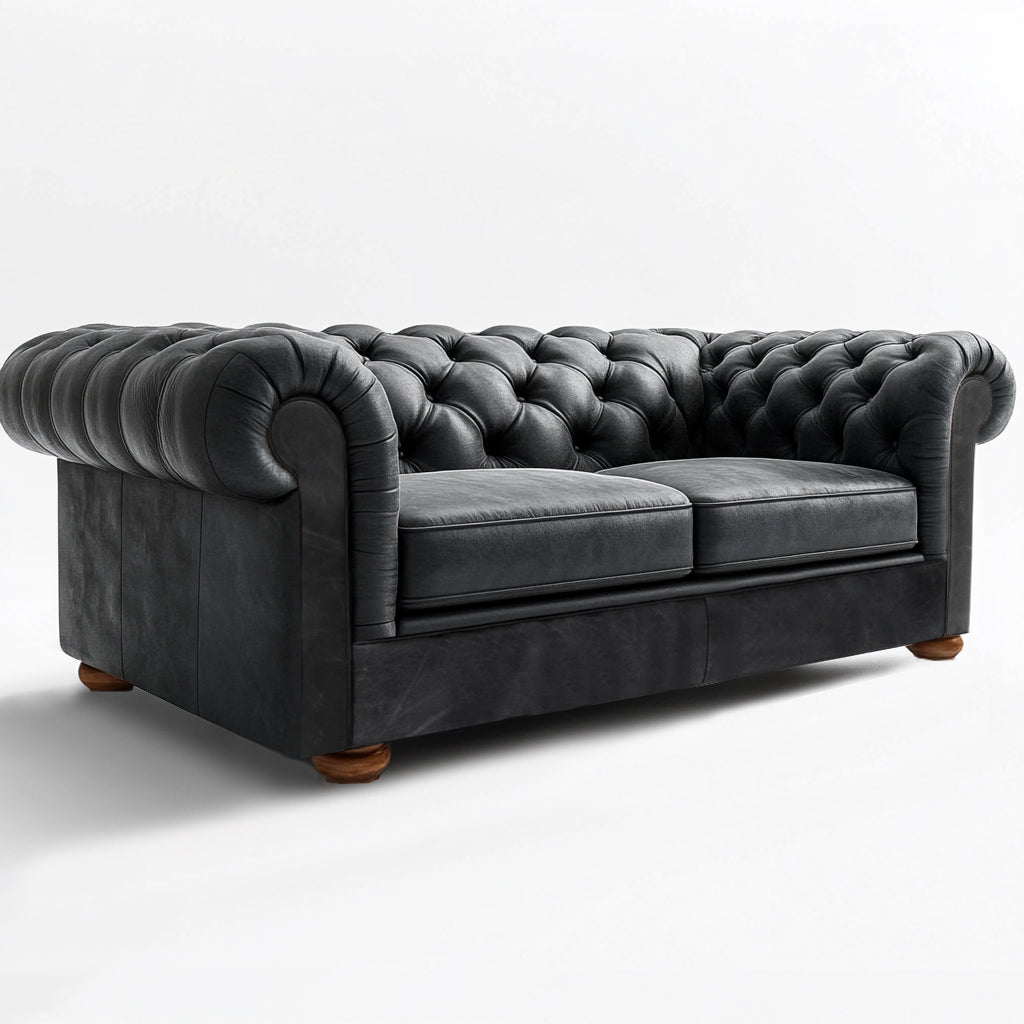
Understanding what not to use on leather sofa surfaces is just as important as knowing the right steps. Many aggressive products deliver a short‑term “clean” at the expense of long‑term damage.
Products and methods to avoid
- Bleach or ammonia‑based cleaners: These can strip colour and degrade the protective topcoat.
- All‑purpose kitchen or bathroom sprays: Often too harsh and not pH‑balanced for leather.
- Baby wipes and household wipes: Contain surfactants, oils, and preservatives that may break down finishes or leave residues.
- Alcohol, acetone, nail varnish remover, or hairspray: Highly likely to remove dye and leave a permanent patch.
- Abrasive pads and “magic eraser” sponges: Act like very fine sandpaper on delicate finishes.
- Undiluted vinegar or strong DIY concoctions: May disrupt the leather’s natural pH balance and dry it out.
Safer long‑term practices
We recommend:
- Using products specifically labelled as suitable for your leather type.
- Following any care booklet supplied with your sofa.
- Discussing maintenance during purchase; many retailers, including Luxury Furniture Collection, can advise on compatible care products.
9. Preventing Future Stains on British Leather Chesterfield Sofas
Preventive care makes it far easier to keep a leather Chesterfield looking composed and refined for years. With a few habits, many serious stains never occur in the first place.
Everyday prevention tips
- Use throws and arm covers: Particularly where there is high contact with hair products, body lotions, or pets.
- Be cautious with dark textiles: Pre‑wash jeans and cushions, especially if your sofa is light.
- Limit food and drink on the sofa: Especially red wine, strongly coloured sauces, and oily snacks.
- Rotate cushions: This helps even out wear and exposure to light.
Periodic care
Many retailers recommend a light clean and protective treatment (with an approved product) several times per year. This helps build a barrier against minor spills and makes it easier to remove stains from a leather Chesterfield sofa when they do occur.
10. Special Considerations for Chesterfield Office Chairs and Accent Pieces
Many homes now pair their main sofa with leather office chairs or wingback chairs in the same style. The same principles apply, but with added wear patterns from desk use.
Office chairs with Chesterfield styling
British leather Chesterfield office chairs experience:
- More contact with clothing dyes on the seat and back.
- Frequent arm contact from wrists and forearms.
- Localised pressure where the user sits for extended periods.
Regular dusting, cautious spot treatment, and protective products suitable for pigmented leather are especially valuable here.
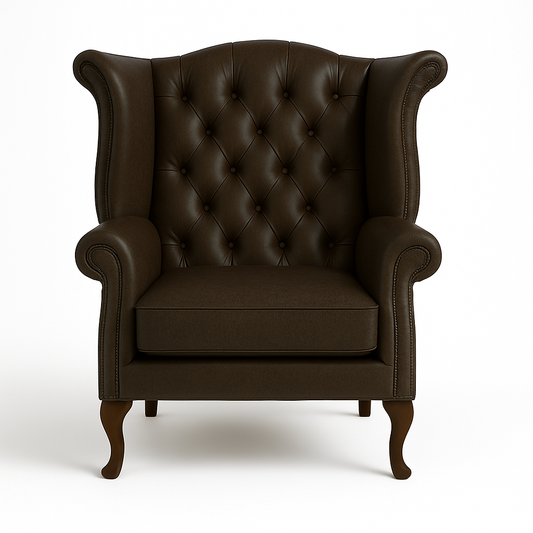
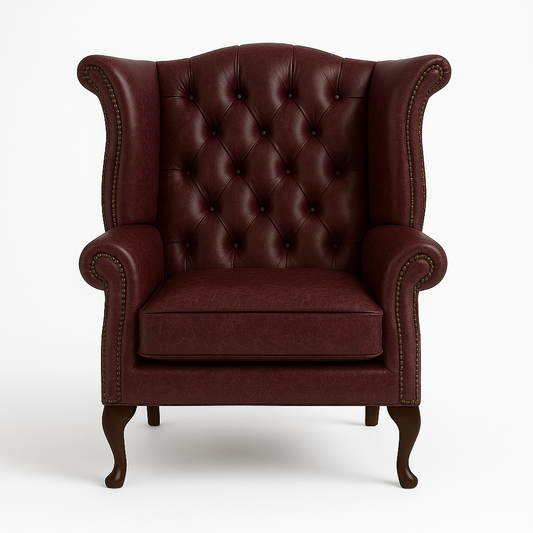
Wingback chairs and accent pieces
Wingback pieces, such as heritage collections, often use similar leathers and finishes to Chesterfield sofas. Clean and protect them at the same time as the main sofa to keep the look consistent across your room.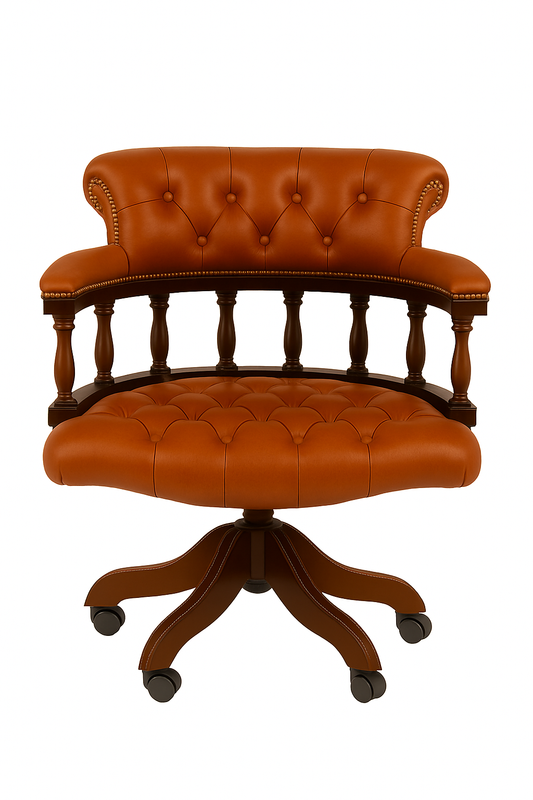
11. Quick Reference: Stain Types and Safe First Steps
To make day‑to‑day decisions easier, it helps to have a simple overview of how to respond to the most frequent issues.
| Stain Type | Leather Finish | First Response | Typical Next Step | When to Call a Professional |
|---|---|---|---|---|
| Water spot | Pigmented | Blot, then gently re‑dampen wider area | Allow to dry naturally | Persistent tide marks after 1–2 attempts |
| Water spot | Aniline | Blot only | Allow to dry; avoid further wetting | Visible dark patch after drying |
| Grease/oil | Pigmented | Blot excess | Use approved cleaner sparingly | Large, dark or spreading patch |
| Grease/oil | Aniline | Blot gently | Monitor; allow natural blending where minor | Prominent seat/arm marks |
| Ink | Any | Blot, do not rub | Use manufacturer’s ink remover only if supplied | Most cases beyond faint, fresh marks |
| Colour transfer | Pigmented | Dry buff | Mild, approved cleaner once or twice | Deep, ingrained transfer |
| Colour transfer | Aniline | Stop; do not experiment | Seek professional assessment | Almost always |
This table is a guide only; always refer to your specific sofa’s care instructions before acting.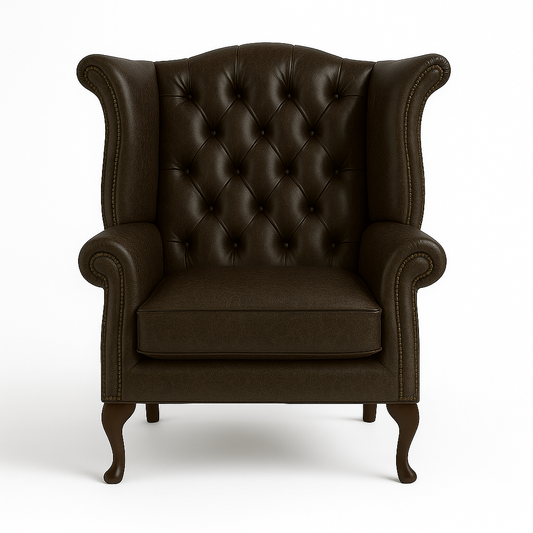
Frequently Asked Questions
1. Can I use washing‑up liquid to remove stains from a leather Chesterfield sofa?
We do not recommend it. Washing‑up liquid is designed to cut through grease on hard surfaces and can strip protective finishes on leather, especially over time. A dedicated leather cleaner, used sparingly, is a safer option.
2. How quickly should I act after a spill?
Ideally, blot spills immediately with a clean, dry cloth. Fast response reduces the chance of absorption, particularly on aniline leather, and makes later cleaning far easier.
3. Is it safe to steam clean a leather Chesterfield?
No. Steam introduces heat and moisture under pressure, which can cause warping, finish damage, and potential delamination. Stick to gentle, manual methods.
4. Why is ink so difficult to remove from leather?
Ink contains solvents and colourants that can penetrate finishes and the leather itself. Removing it often requires professional‑grade products and, in some cases, recolouring, which is why we advise professional help for most ink stains.
5. Can I condition my sofa more often to prevent stains?
Over‑conditioning can leave a residue and attract dirt. Follow the frequency recommended by your retailer or care kit — typically a few times per year, not monthly.
6. Are all leather Chesterfield sofas pigmented?
No. Many British manufacturers offer both pigmented and aniline options, each with different care requirements. Confirm your specific leather type before attempting any stain removal.
7. Will a water spot on pigmented leather always disappear?
Light water marks often improve significantly with careful re‑dampening and slow drying, but severe soaking or repeated incorrect cleaning can leave permanent changes. Prevention and early, gentle intervention are best.
8. How do I avoid colour transfer from clothes?
Wash new dark jeans and garments several times before frequent use on light leather, and be cautious with cheap, heavily dyed fabrics. If you notice early signs of transfer, address them promptly with a gentle, approved cleaner.
9. Is it worth calling a professional for a small stain?
On a high‑value British Chesterfield, professional help for even a relatively small but prominent stain can be worthwhile, particularly on the centre of a seat or the front of an arm. They can often correct the issue with minimal trace.
10. Do all retailers provide care kits?
Not all, but many premium retailers do supply or recommend specific care and protection kits. When you purchase, ask what they suggest for ongoing maintenance and stain management tailored to your sofa’s leather and finish.
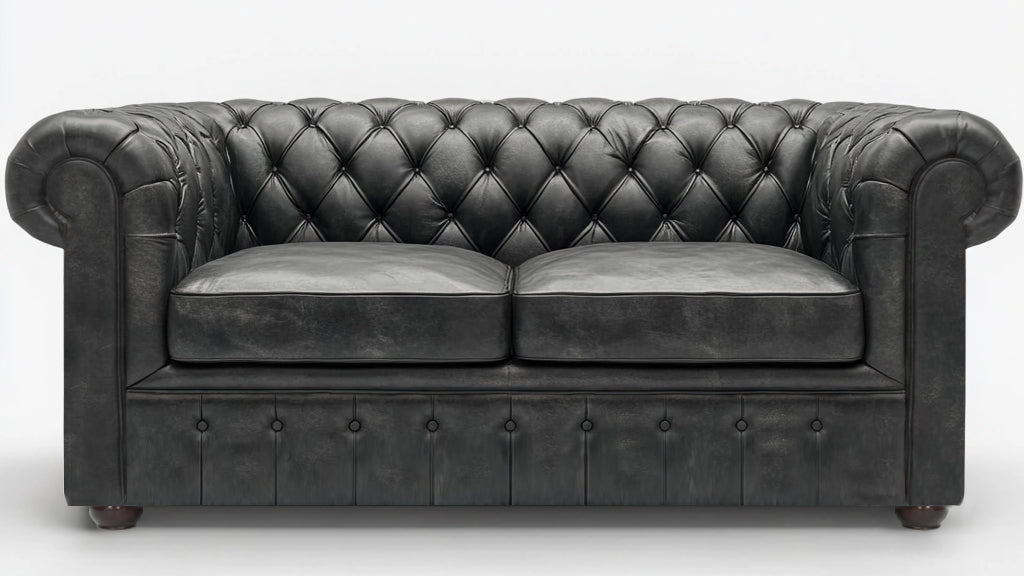
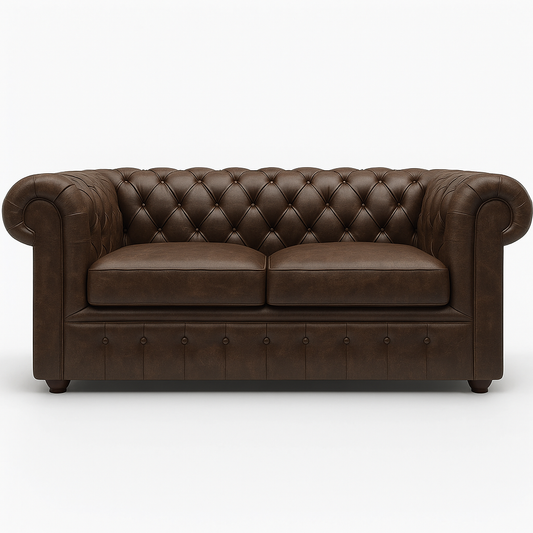
About Luxury Furniture Collection
Luxury Furniture Collection specialises in British‑crafted leather Chesterfield sofas, chairs, and office seating, built with premium materials and traditional techniques for long‑term use. To explore their ranges and learn more about their approach to craftsmanship and care, visit Luxury Furniture Collection.
Conclusion
A carefully made leather Chesterfield can serve your home for decades, but only if we respect the material when dealing with spills and marks. The safest route is always to identify your leather type, start with the gentlest possible method, patch test thoroughly, and stop immediately if colour lifts or the finish changes. When you are unsure — particularly with ink, heavy grease, or serious colour transfer — bringing in a professional is often the most economical decision over the life of the sofa. If you are considering a new British Chesterfield or looking for a piece whose leather is designed with maintenance in mind, we invite you to browse the leather Chesterfield sofas available at Luxury Furniture Collection.