Full-Grain vs Top-Grain Leather Chesterfield Sofas: The Clear, No-Nonsense Guide for British Buyers
When you invest in a British leather Chesterfield sofa, most of what you are paying for is the leather itself – and leather is not all created equal. Leather remains the most popular upholstery material for Chesterfield-style sofas, yet terms like “full-grain”, “top-grain”, “corrected-grain” and “bonded” are often used loosely in product descriptions, leaving buyers unsure what they are really getting. In this guide, we break down each leather type in practical terms, using real British-made Chesterfields from Luxury Furniture Collection as reference points, so you can match the right leather to your home, lifestyle, and budget without guesswork.
Key Takeaways
| Question | Concise Answer |
|---|---|
| What is the difference between full-grain vs top-grain leather Chesterfield? | Full‑grain keeps the entire natural grain and develops the richest patina; top‑grain is slightly sanded for a more uniform, softer finish with a little less long-term toughness. |
| Is corrected-grain leather good enough for a Chesterfield sofa? | Corrected‑grain leather sofas can be durable and stain-resistant, but they lose natural character; they suit busy homes that prioritise easy care over patina. |
| What does “genuine leather” really mean for a sofa? | “Genuine leather” often just means “not faux”; it usually refers to lower‑grade split or corrected leather. Always ask the retailer which grain it is and request a spec sheet. |
| Is a bonded leather Chesterfield worth buying? | Bonded leather is made from leather fibres and polyurethane; it is the least durable option and prone to peeling. We generally advise avoiding it for timeless Chesterfields. |
| Which leather is best for pets and kids? | High‑quality full‑grain or robust top‑grain with a protective finish works best. Many buyers choose cracked‑wax full‑grain leathers like those in the leather Chesterfield sofa collection for their forgiving, characterful ageing. |
| How can I avoid misleading product descriptions? | Watch for vague phrases like “genuine leather” with no grain specified. Ask for a written spec sheet stating full‑grain/top‑grain/corrected/bonded, finish type, and care guidance. |
| Where can I see examples of British full-grain leather Chesterfields? | Collections such as the British‑made Cambridge and Grosvenor Duke sofas, for example the Cambridge in Balmoral Mulberry, use premium full‑grain leathers with a cracked‑wax or vintage finish. |
1. Understanding Leather Grades on a Chesterfield Sofa
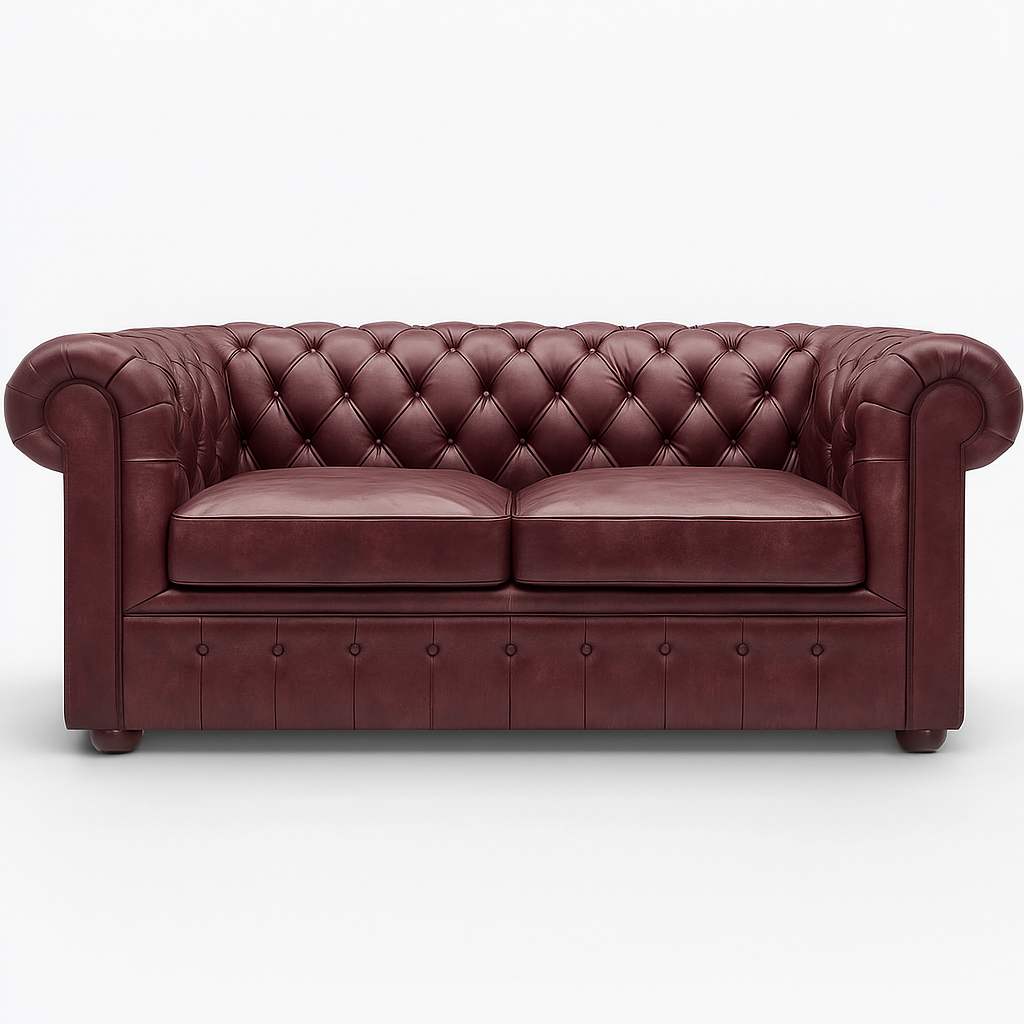
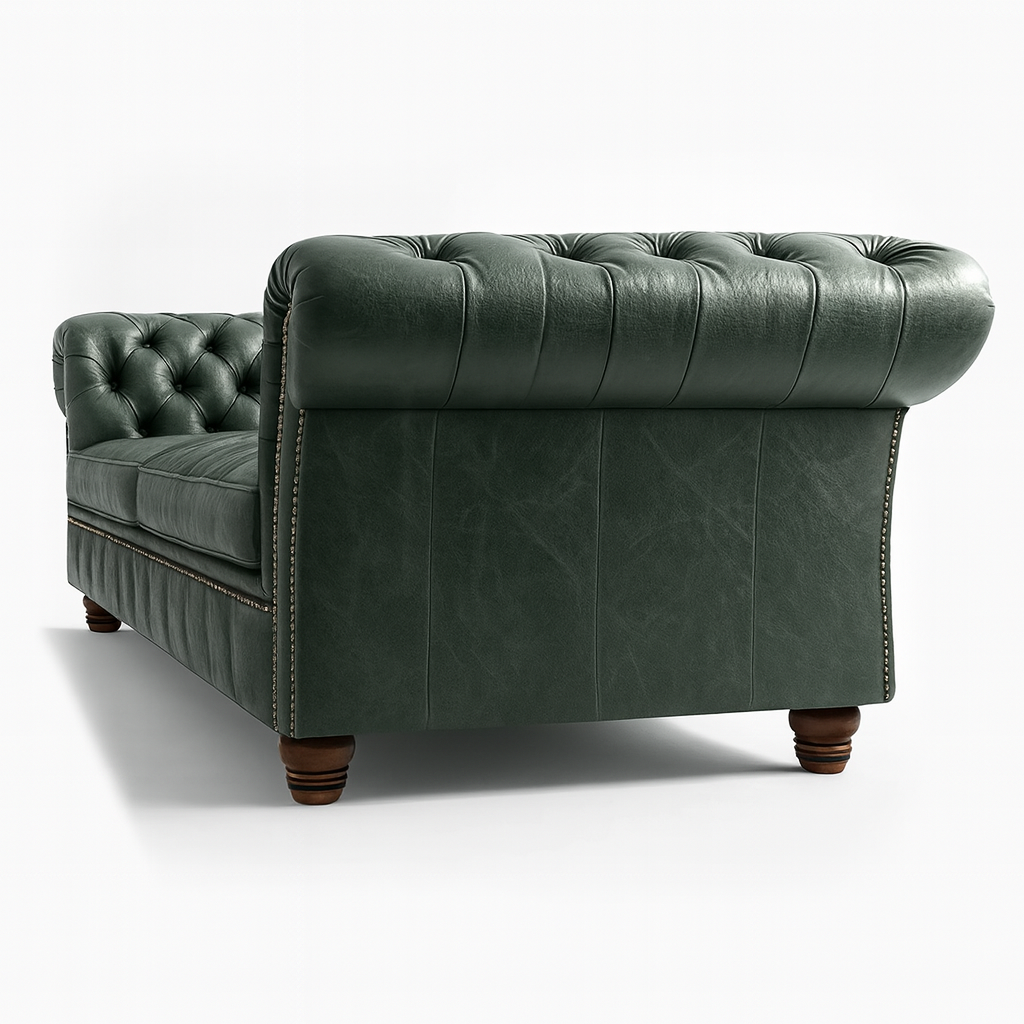
When we discuss full grain vs top grain leather Chesterfield sofas, we are really talking about how much of the hide’s original surface is preserved. That surface is where the fibre structure is densest, giving strength, and where natural markings sit, giving character. British leather Chesterfield sofas, such as those in the Luxury Furniture Collection range, typically use full-grain or high‑end top-grain leather, sometimes with specialist finishes like cracked wax or vintage effects. Before you look at styles or colours, it pays to understand these core material choices.
Key leather types you will see
- Full-grain leather: Entire natural grain retained, no surface buffing; highest durability and most authentic look.
- Top-grain leather: Outer surface lightly sanded/buffed; still high quality, more uniform, usually a little softer.
- Corrected-grain leather: Surface heavily buffed and embossed; hides flaws, more coating, less natural character.
- Bonded leather: Reconstituted leather fibres with polyurethane; visually “leather-like” but lowest in longevity.
We will refer back to these definitions as we explore how each behaves on a Chesterfield in day‑to‑day use.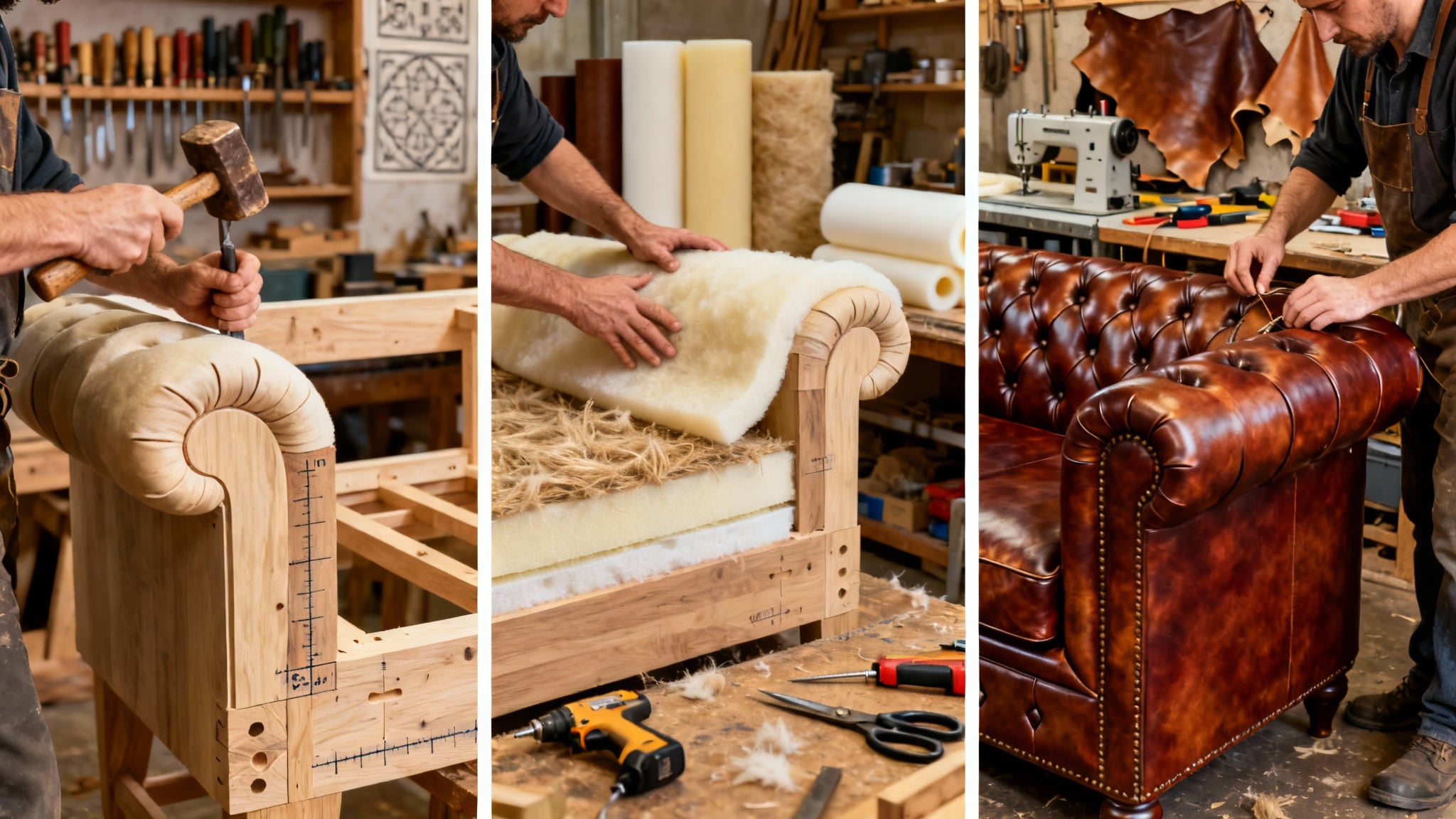

2. Full-Grain Leather Chesterfield Sofas: Character and Longevity
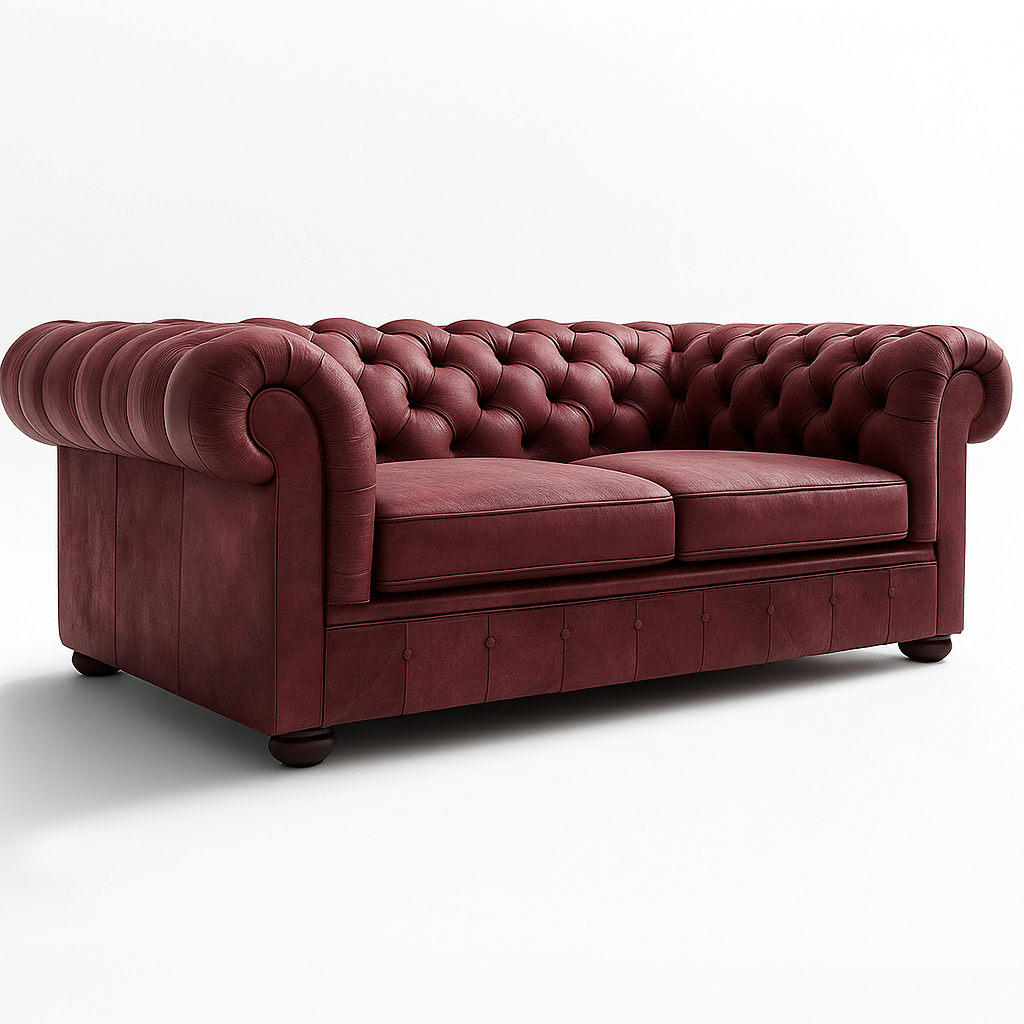
Full‑grain leather is the benchmark for a British leather Chesterfield sofa built to last decades. It preserves the entire natural grain, including subtle marks and shade variation, which is why it feels dense, robust, and slightly “alive” under the hand. Over time it develops a patina: a soft sheen, gentle darkening and mellowing that many buyers actively seek. Many of the Cambridge and Grosvenor Duke sofas in cracked‑wax leathers, such as the Cambridge Sofa in Balmoral Mulberry at £2,495.00, use premium full‑grain hides. The cracked‑wax finish sits on top of the grain: as the sofa is used, the wax flexes, enhancing highlights and lowlights while leaving the underlying fibre strength intact.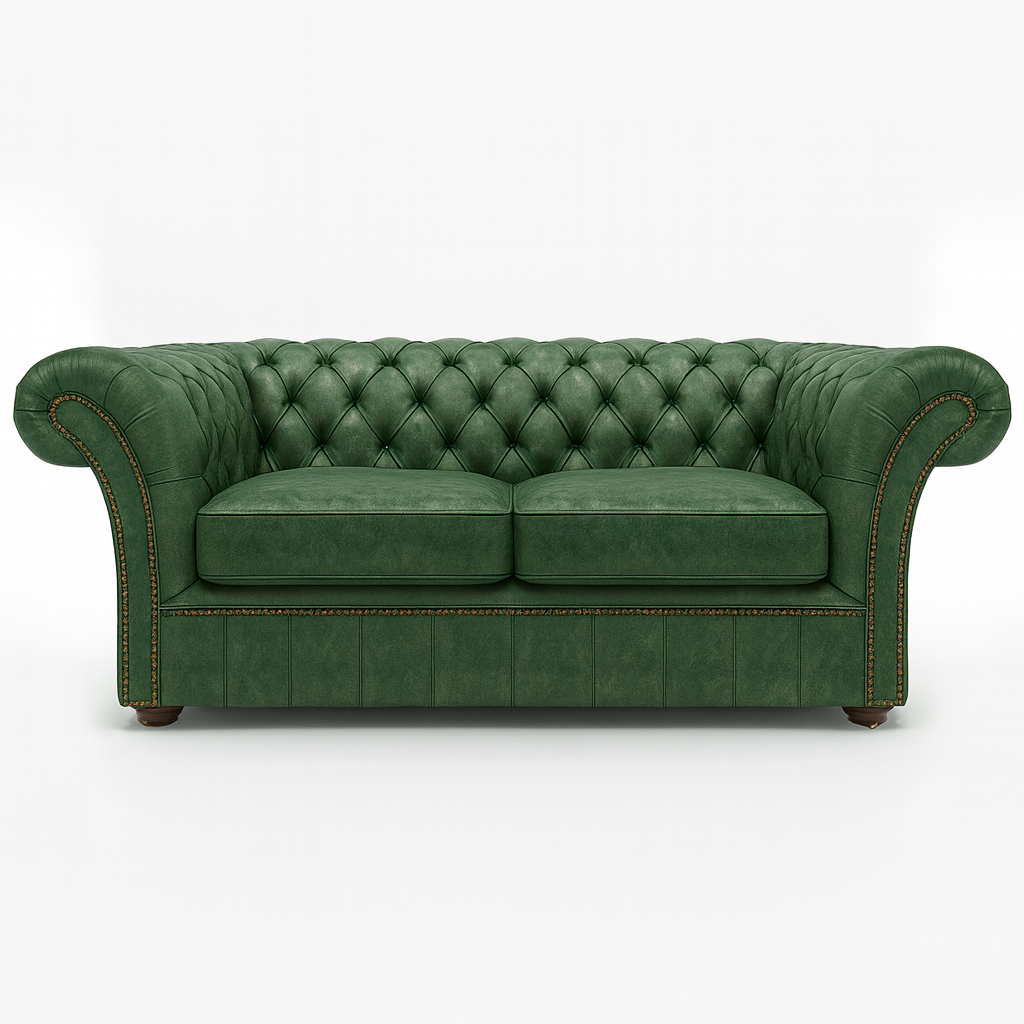
How full-grain behaves in real homes
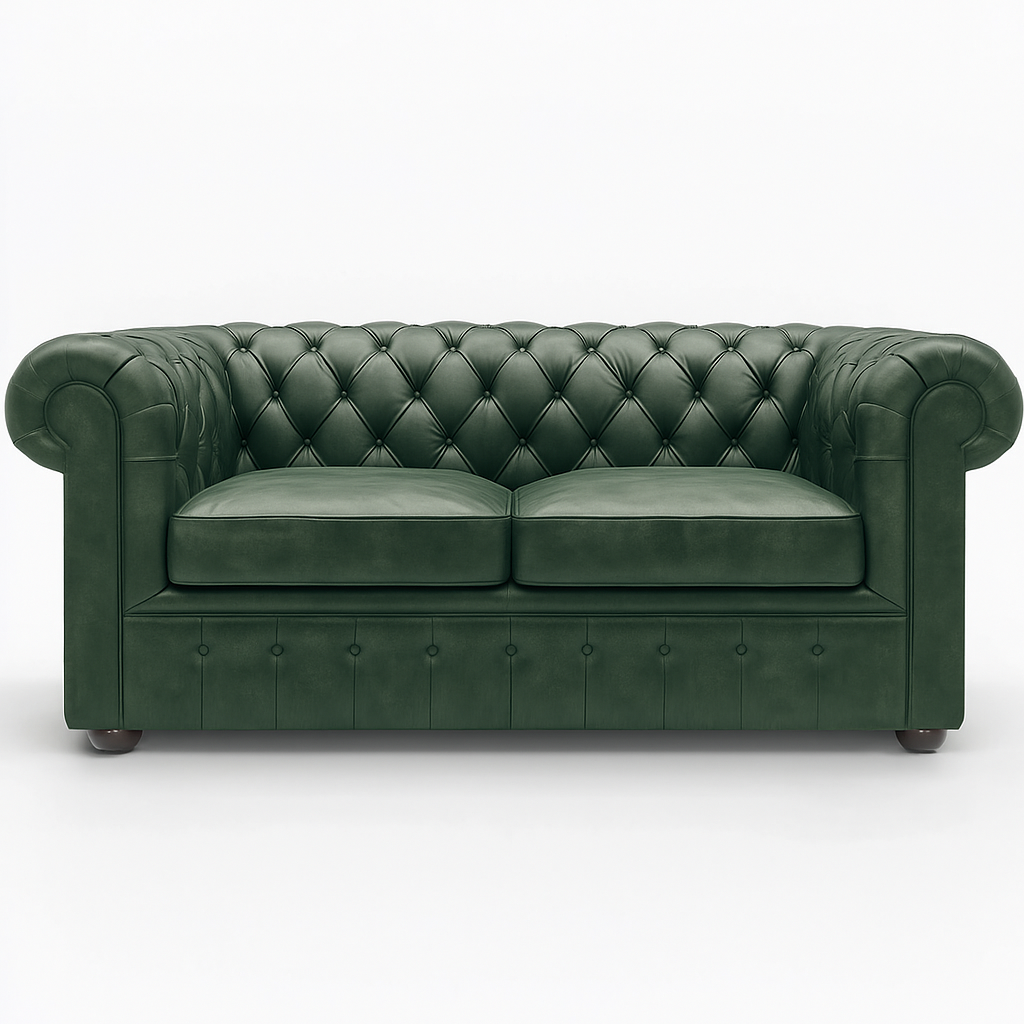
- Durability: Excellent. The tight fibre structure at the surface resists wear and remains strong across the deep buttoning and rolled arms of a Chesterfield.
- Feel: Initially firm and structured, then softening with use; still supportive, not spongy.
- Appearance: Visible natural grain and shade variation; minor marks blend into the overall character rather than standing out.
- Patina: Significant; surface becomes richer, often looking better after a few years than when new.
For buyers who prefer a sofa that ages gracefully and are comfortable with natural markings, full‑grain is usually the first recommendation.
3. Top-Grain Leather Chesterfield Sofas: Balance of Refinement and Strength
Top‑grain leather is the next tier and is still considered premium. In this case, tanneries lightly sand or buff the very outer surface to remove stronger imperfections, then apply a finish coat. The result is a leather that remains strong but has a slightly more uniform look and generally a softer hand than many full‑grain leathers. In practice, a top-grain leather Chesterfield will feel a little silkier and may show fewer natural scars or tonal variations. For some buyers, that more “polished” uniformity is exactly what they want in a formal drawing room or a modern, minimal scheme.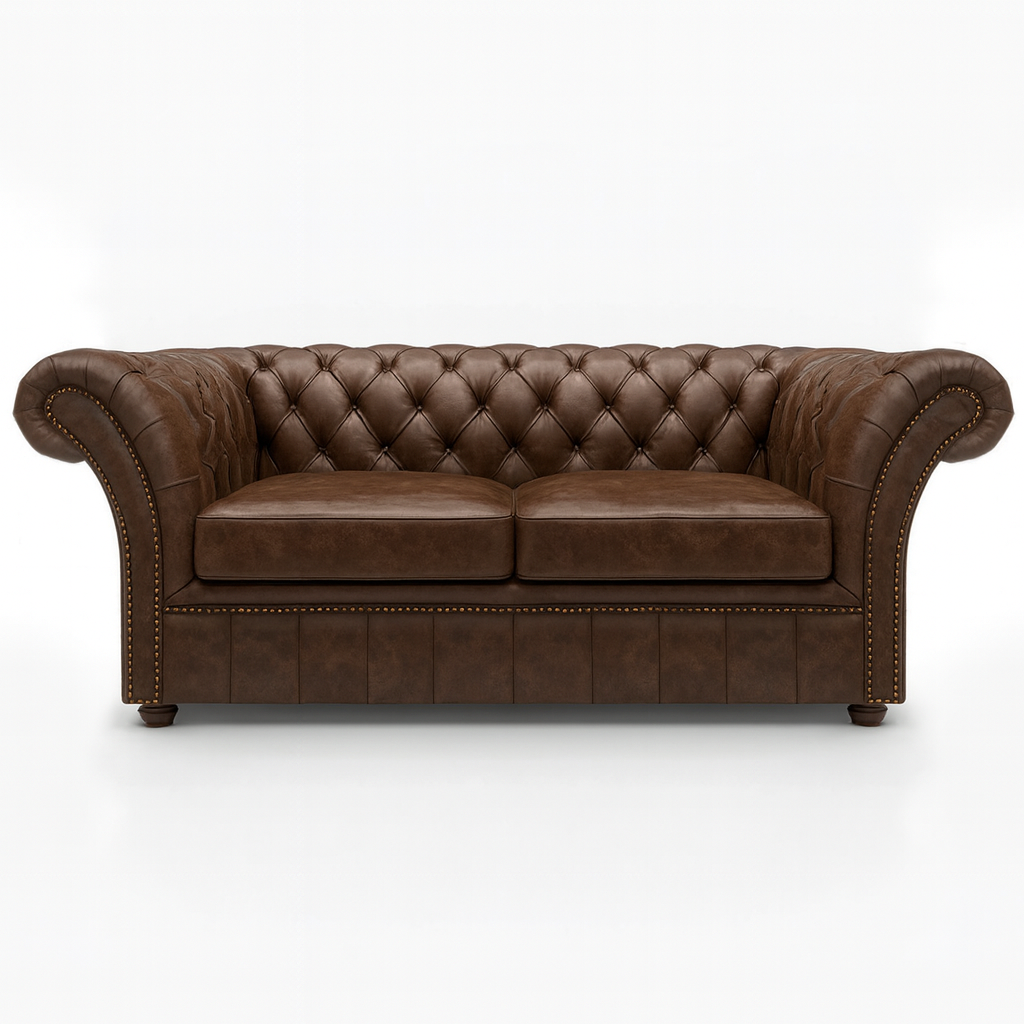
How top-grain compares in daily use
- Durability: Very good, though marginally below full‑grain over decades of use.
- Feel: Typically softer and more pliable from day one; can feel more “broken in” at delivery.
- Appearance: More even colour and grain; fewer visible natural marks, depending on finish.
- Patina: Develops some patina, but less dramatic than uncorrected full‑grain.
We often suggest top‑grain to clients who want a Chesterfield that feels refined and soft underhand, and who prefer a more controlled, less rustic aesthetic.
4. Corrected-Grain Leather Sofas: Practical but Less Characterful
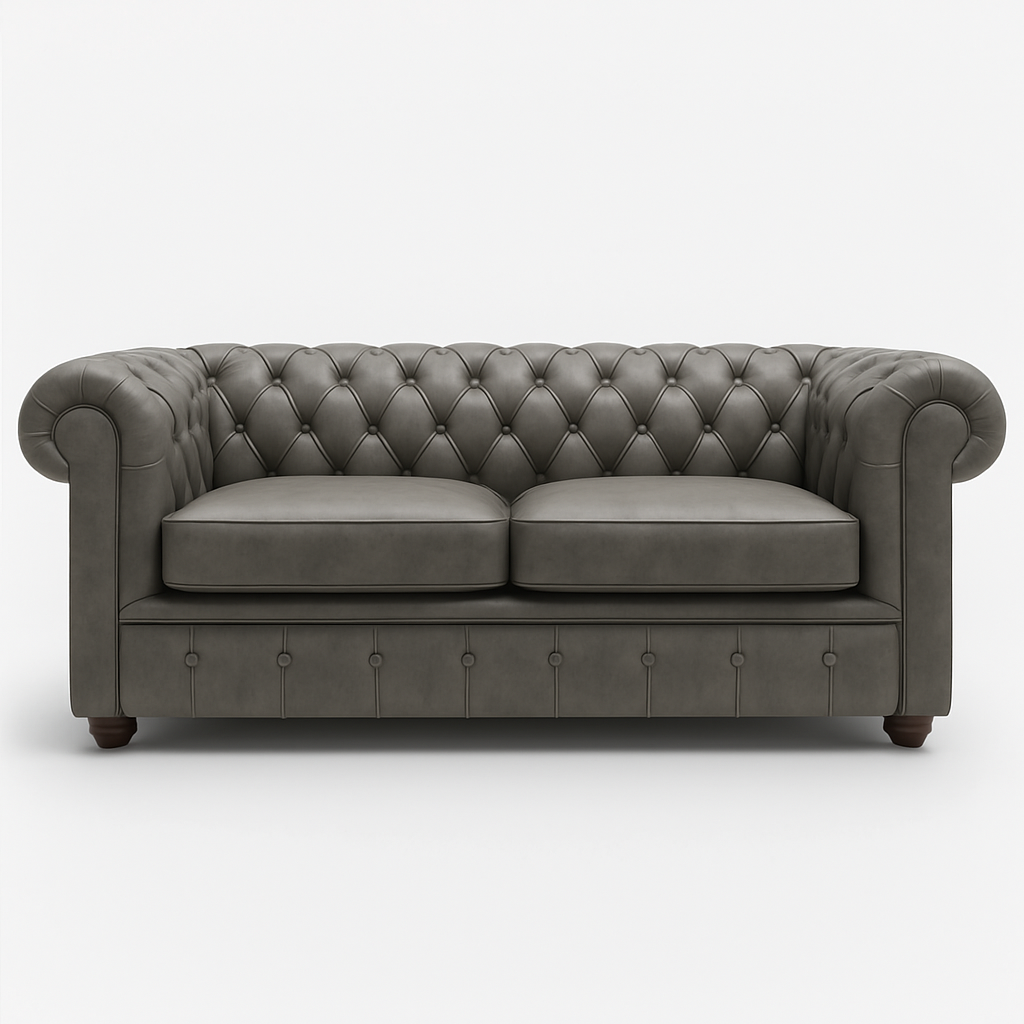
A corrected grain leather sofa is made from real leather, but its surface is heavily buffed, then embossed with an artificial grain pattern and coated with pigment. This approach hides natural scars and inconsistencies, which can be useful when working with lower‑grade hides or when a highly uniform finish is required. For a Chesterfield, corrected‑grain can give a very even, “perfect” look, particularly in solid dark tones. However, because much of the original grain is removed or obscured, it lacks the depth and nuance you see in full‑grain or high‑quality top‑grain.

Corrected-grain in daily life
- Durability: The protective coating can resist surface staining, but once cracked, it is hard to repair invisibly.
- Feel: Often smoother and more “finished”, but can feel a little plasticky compared to full- or top‑grain.
- Appearance: Very even; grain pattern is often repeated and lacks the irregularity of natural hide.
- Patina: Limited; coating tends to wear rather than develop a deep, natural sheen.
We typically position corrected‑grain as a more budget‑conscious or purely practical option for buyers who are less concerned with patina and more focused on easy, wipe‑clean surfaces.

5. Bonded Leather Chesterfields: What You Need to Know
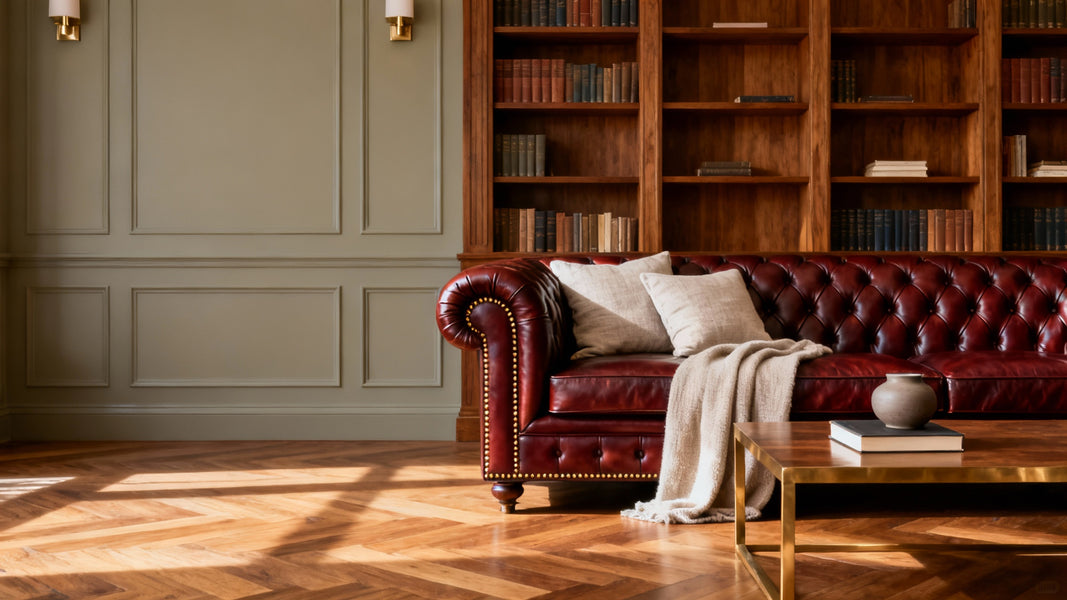
A bonded leather Chesterfield is typically made from shredded leather off‑cuts mixed with polyurethane, rolled out into sheets, and embossed to imitate leather grain. It can look convincing when new and is often marketed with phrases like “real leather content” or simply “leather”. The challenge with bonded leather is longevity. It lacks the continuous fibre structure of a hide, so over time the surface film can peel, particularly on high‑stress points like arm fronts and seat edges. For a Chesterfield, where the silhouette is meant to last decades, this is a serious compromise.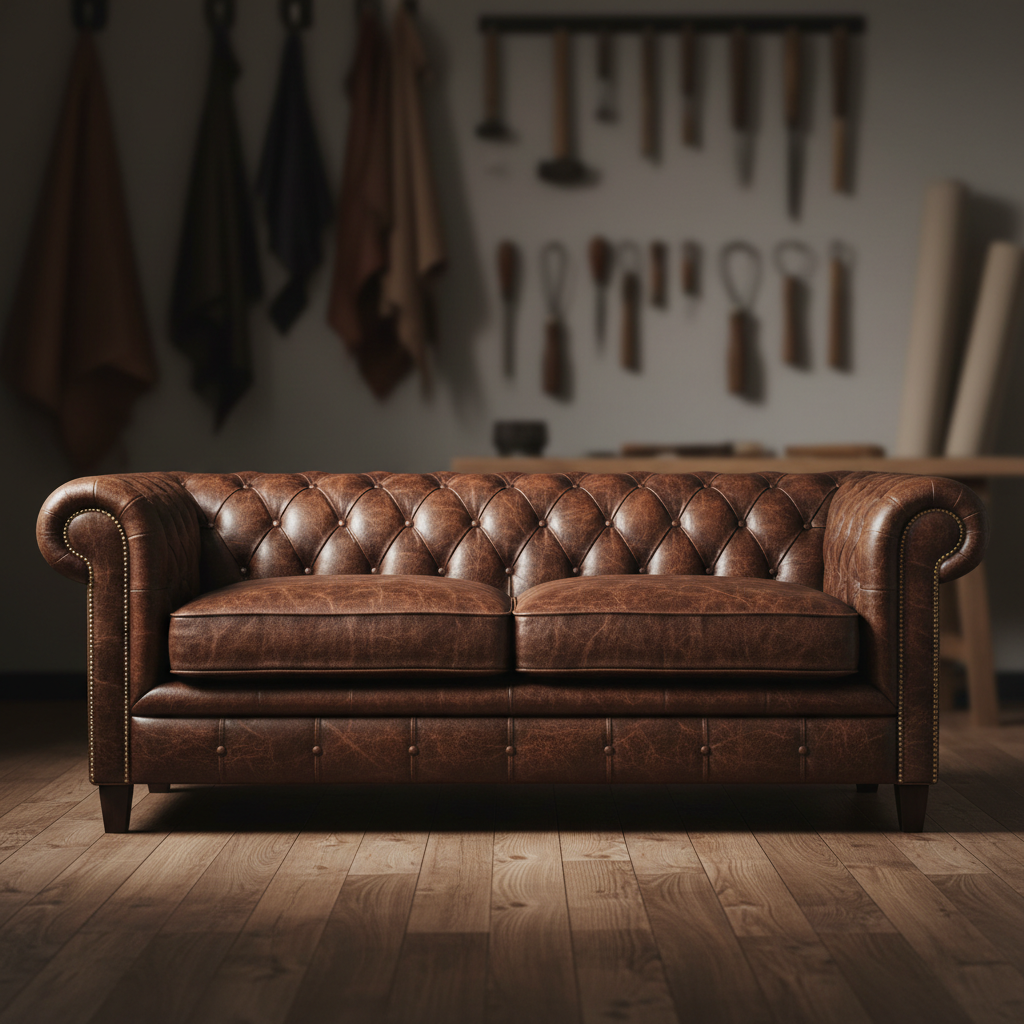
Where bonded leather sits in the market
- Durability: Lowest of the four options; prone to peeling and cracking.
- Feel: Can be quite smooth; often feels more synthetic than genuine hide.
- Appearance: Very uniform; tends not to change in a pleasing way with age.
- Patina: Essentially none; surface tends to degrade rather than improve.
Because a Chesterfield is a long‑term piece, we usually recommend avoiding bonded leather, even when budgets are tight. A fabric Chesterfield or a smaller full‑ or top‑grain design is often a better long‑term investment.
6. Full-Grain vs Top-Grain vs Corrected vs Bonded: Side-by-Side Comparison
To make sense of full grain vs top grain leather Chesterfield options alongside corrected‑grain and bonded leather, it helps to see them in one view.
| Leather Type | What It Is | Durability | Feel | Appearance & Patina | Best Use |
|---|---|---|---|---|---|
| Full-grain | Whole natural grain, no buffing | Excellent; strongest fibre structure | Firm then comfortably supple | Rich grain, visible natural marks; strong patina development | Heirloom Chesterfields; heavy daily use; character lovers |
| Top-grain | Lightly sanded outer surface | Very good | Softer from new | More uniform; gentler patina | Formal rooms; buyers wanting softness and refinement |
| Corrected-grain | Heavily buffed, embossed, coated | Moderate; relies on coating | Even, sometimes slightly synthetic | Uniform look; limited natural patina | Budget-conscious or very practical spaces |
| Bonded | Leather fibres + polyurethane sheet | Low for long-term Chesterfields | Often smooth, “faux-leather-like” | Minimal patina; risk of peeling | Short-term or low-traffic seating (not ideal for classic Chesterfields) |
7. “Best for You If…” – Matching Leather Type to Real Life
Different households use their Chesterfield differently. Below is a straightforward way to align leather types with how you live, rather than how leather is discussed in theory.
- Busy family home with pets and children: High‑quality full‑grain or robust top‑grain with a protective finish (such as cracked‑wax or semi‑aniline) works best. Minor scuffs and scratches blend into the patina rather than ruining a flawless surface.
- Formal drawing room or seldom‑used sitting room: Top‑grain or lightly finished full‑grain works well; you can opt for paler colours and slightly more delicate finishes because wear is lighter.
- Heavy daily use (work from home, frequent guests): Full‑grain remains the strongest option over 10–20+ years.
- Rental property or short‑term use: Corrected‑grain can be a reasonable, resilient choice if you are less concerned with patina.
Colour choices and lifestyle
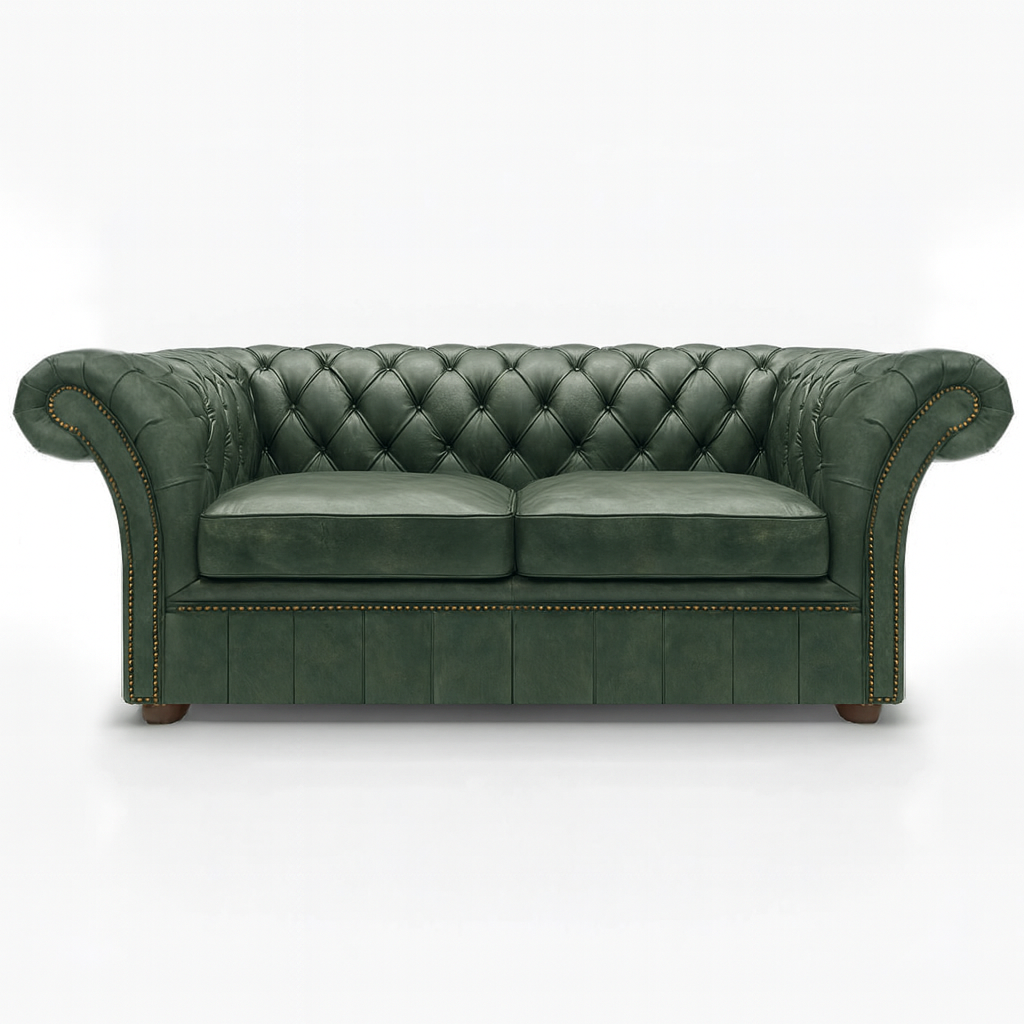
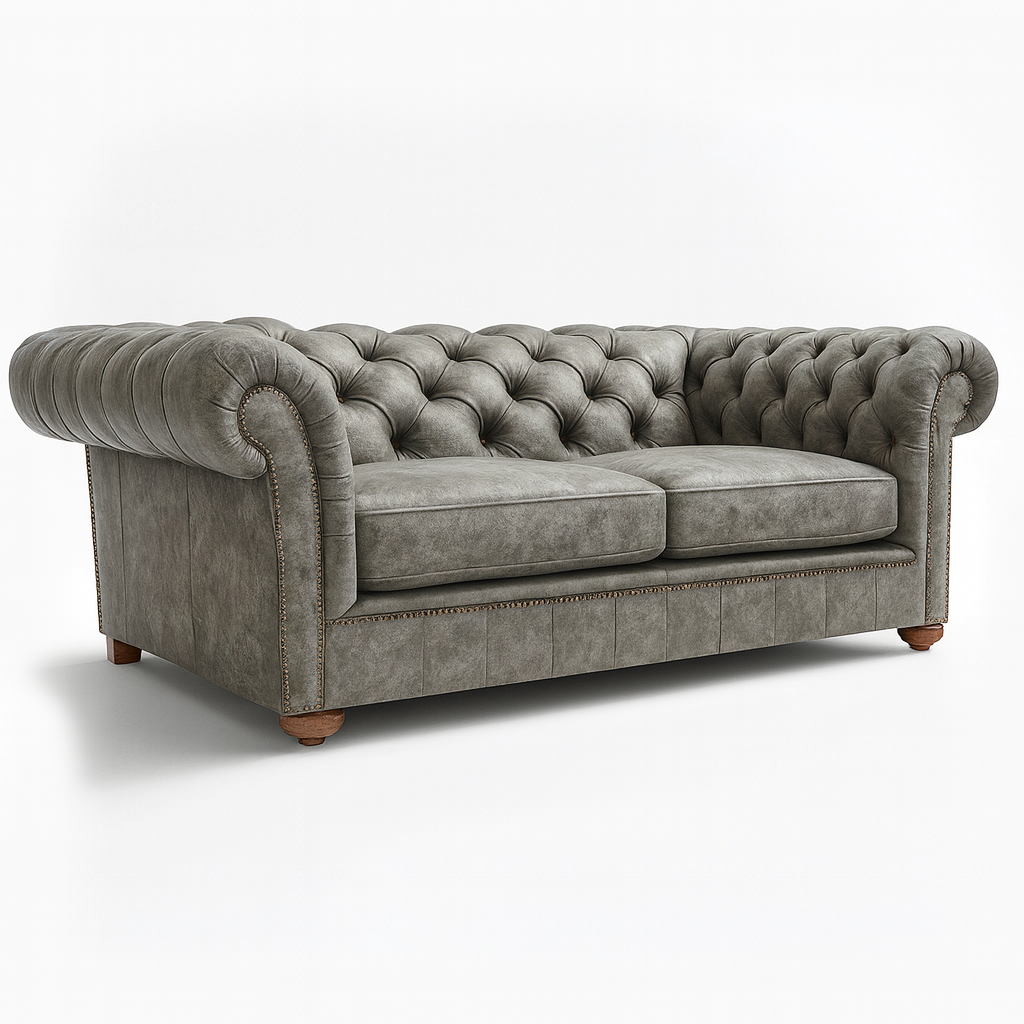
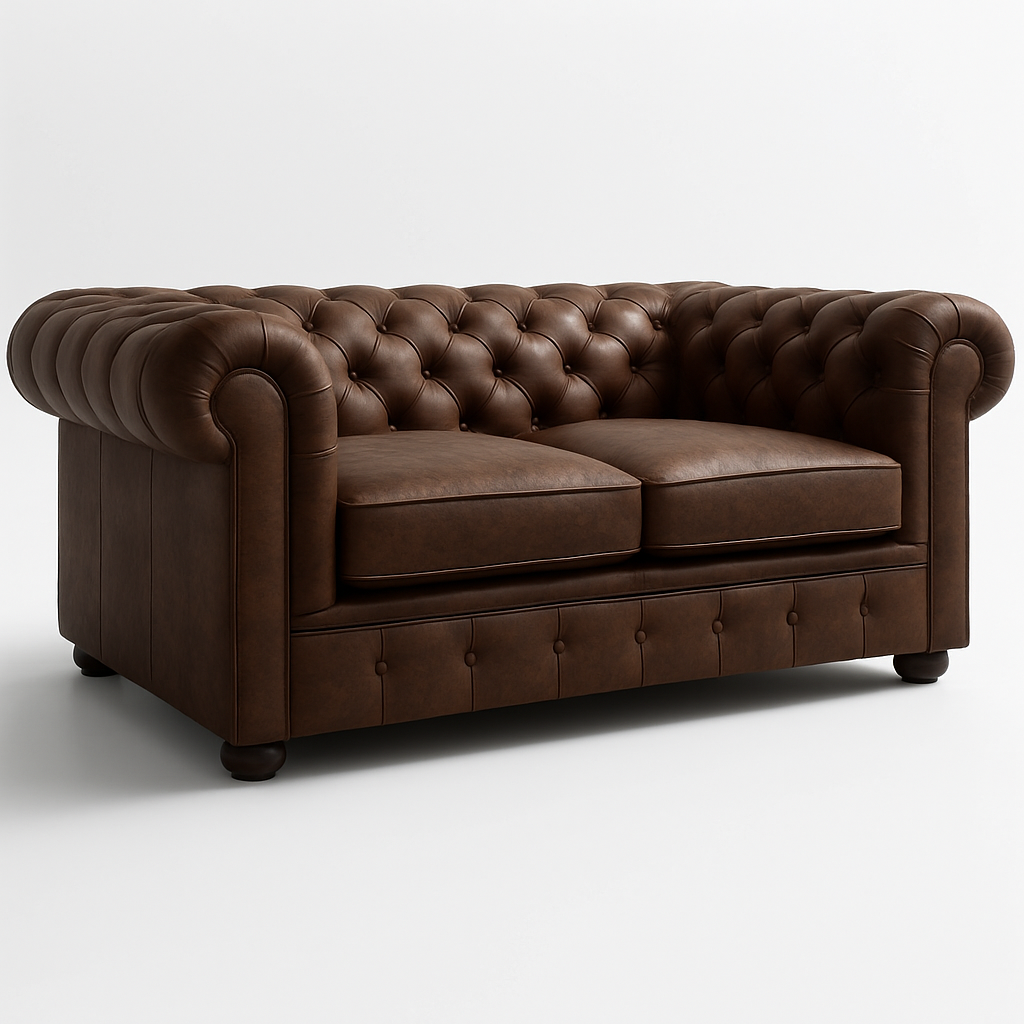
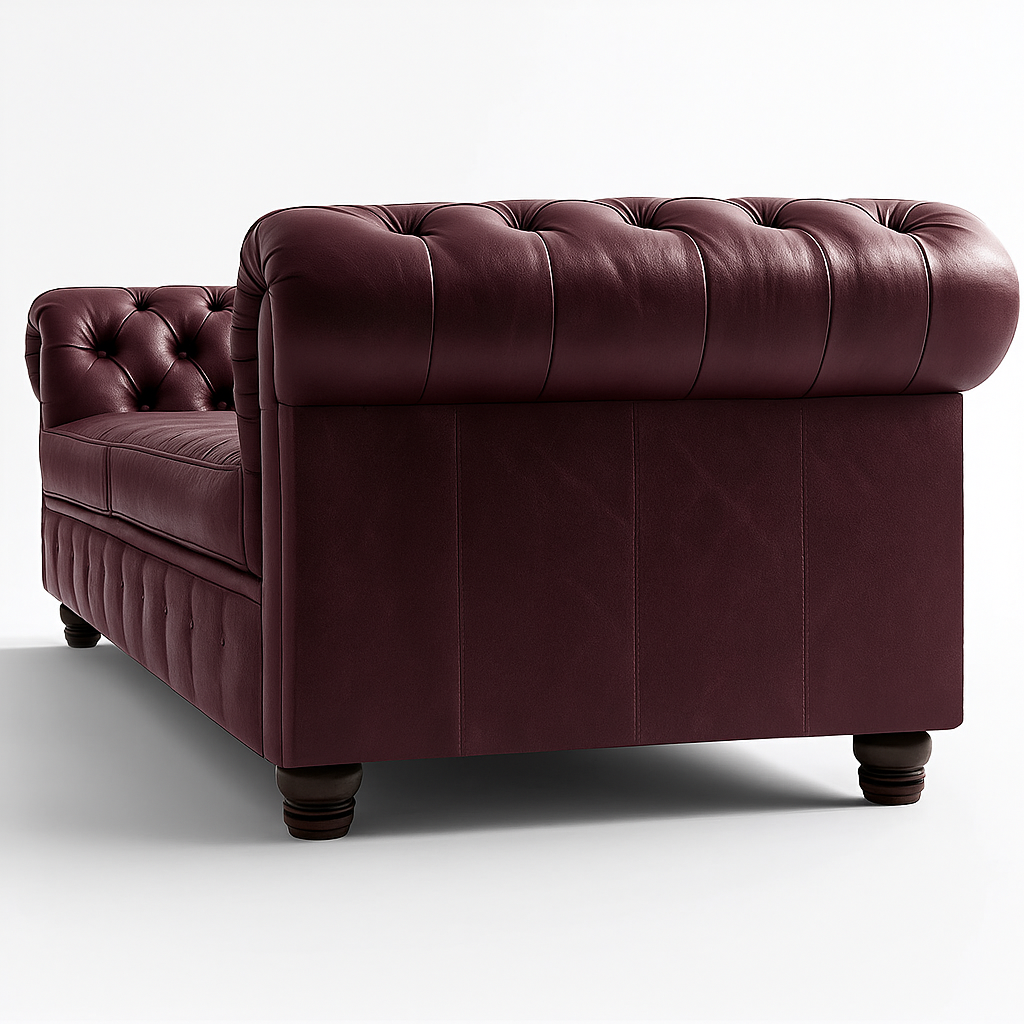
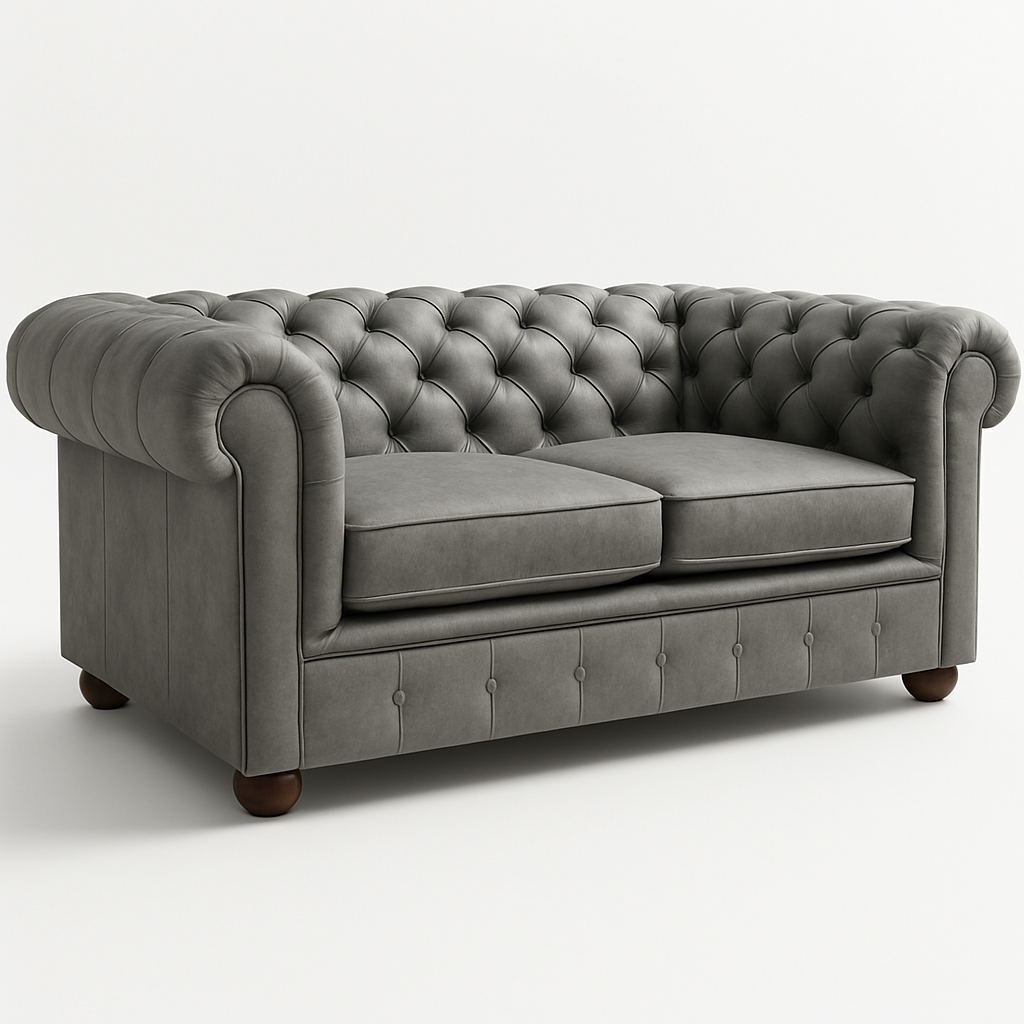
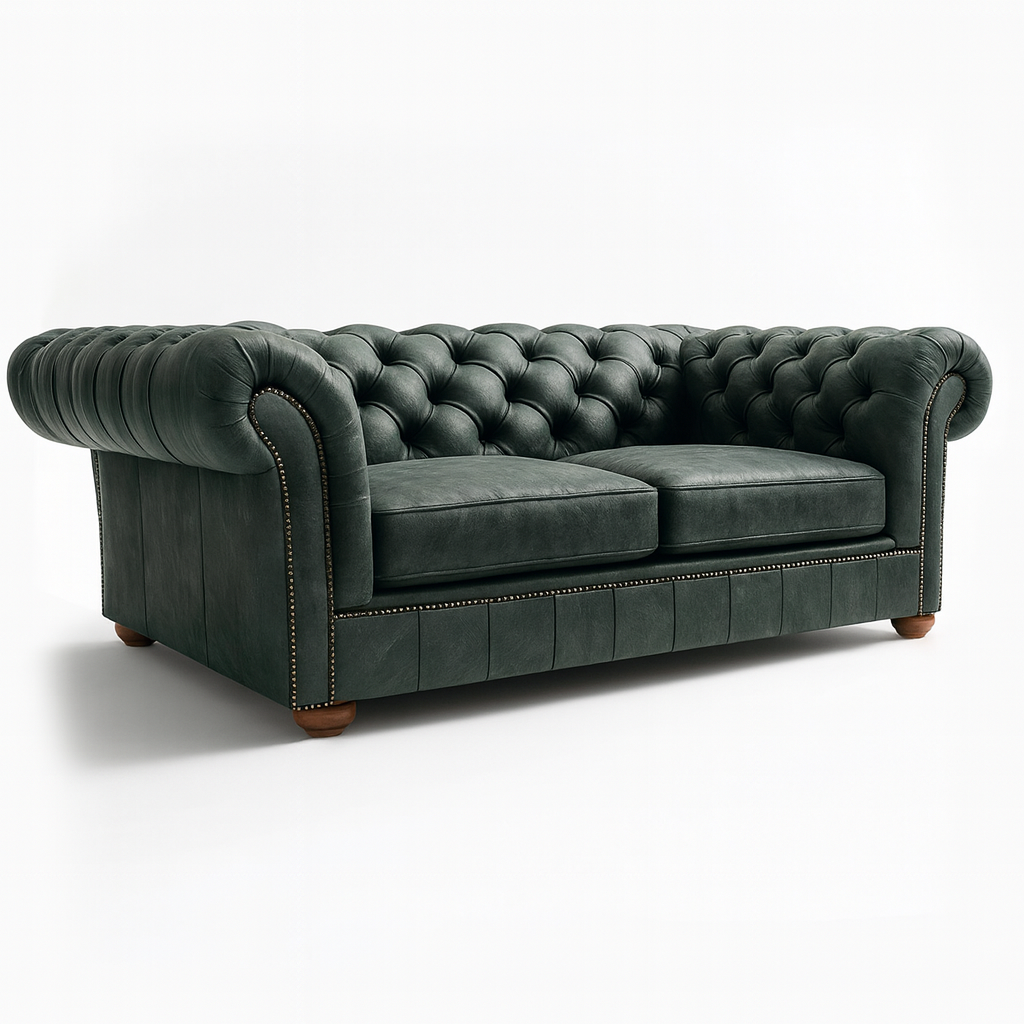
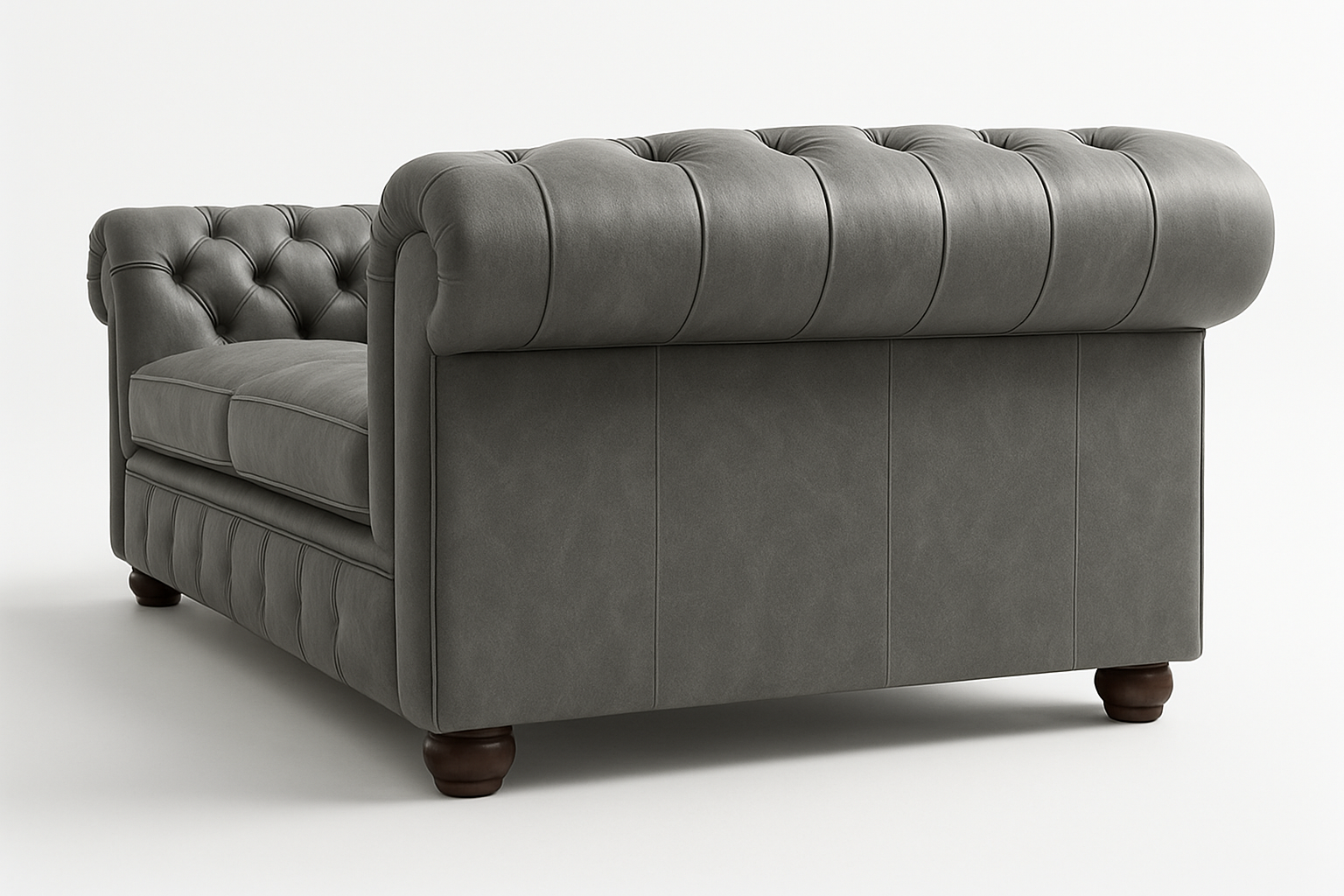
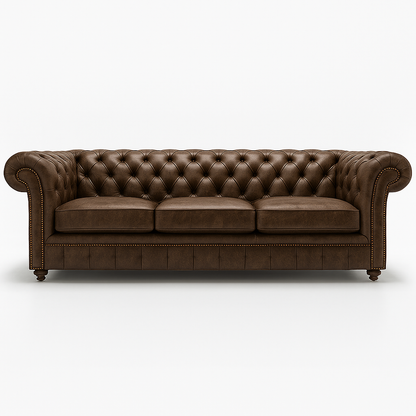
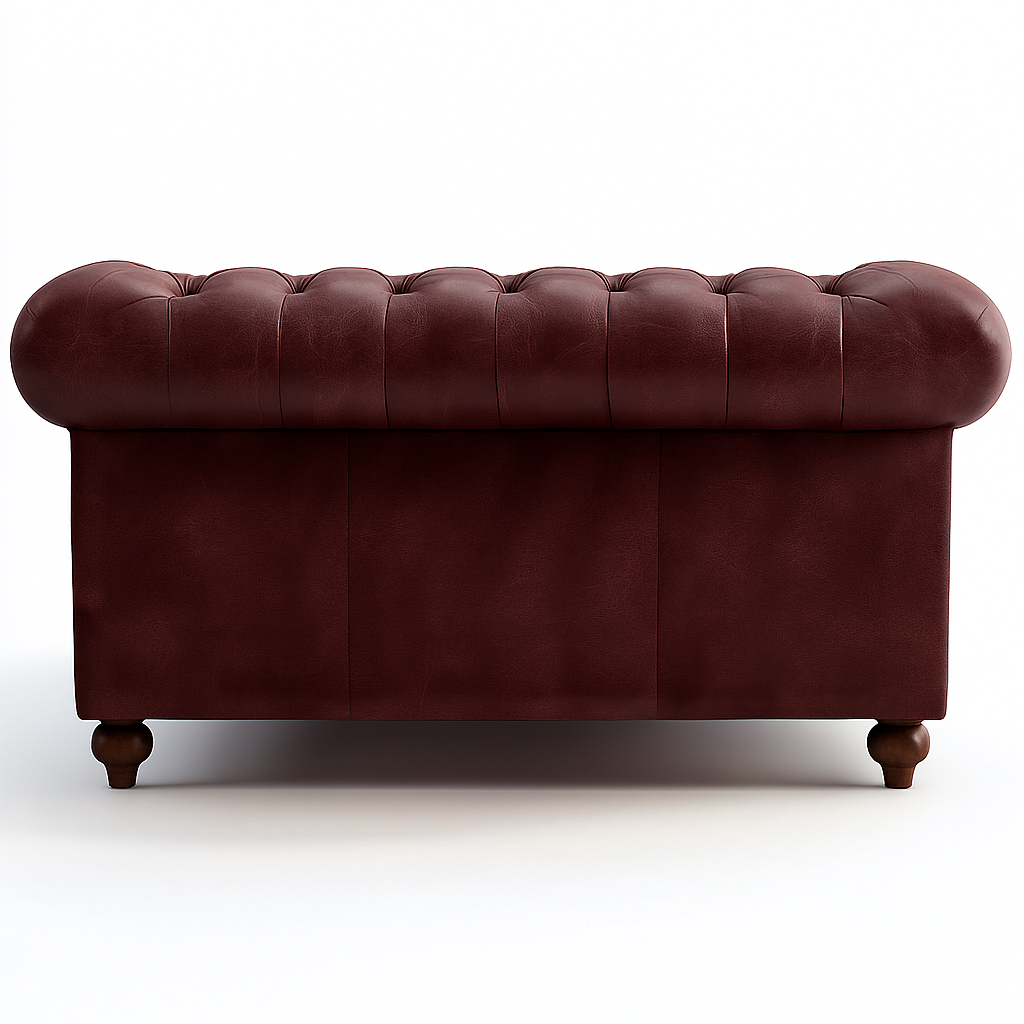
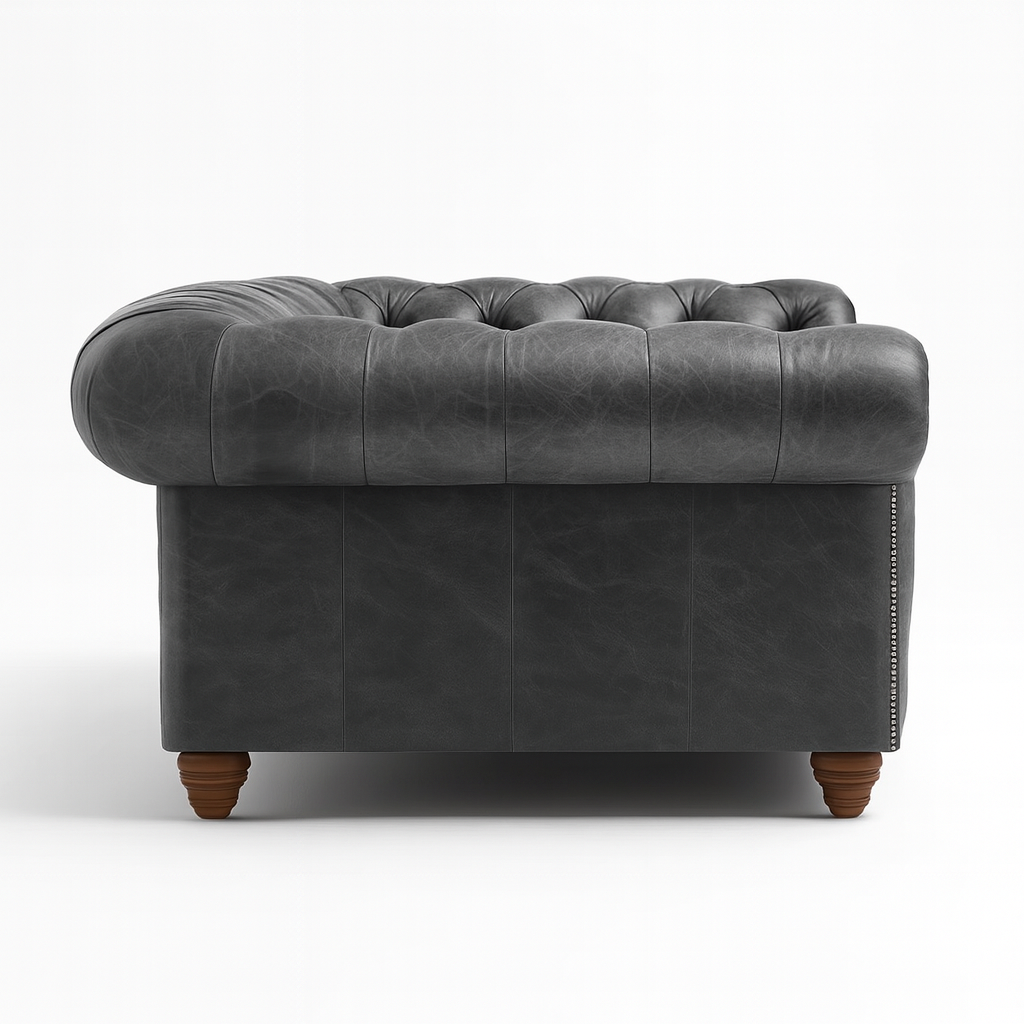
King Living UK data shows that brown leather accounts for 53% of leather sofa sales, with neutrals and grey making up much of the remainder. That trend aligns with what we see: tones like Caledonian Espresso Brown and Thames Fog Ash Grey provide practical, forgiving backdrops for everyday life while still looking refined in a Chesterfield profile. If you favour a bolder statement, shades such as Balmoral Mulberry or deep greens like Highland Grove Juniper Green can remain surprisingly versatile, especially in full‑grain leathers that soften visually over time.
8. “Genuine Leather” Meaning on a Sofa – Red Flags and Questions
The term “genuine leather” meaning (sofa) is one of the biggest sources of confusion we see. In industry language, “genuine leather” often refers to any leather product that is not faux, including lower‑tier split and corrected‑grain materials. It does not guarantee full‑grain or top‑grain quality. When you see “100% genuine leather” on a Chesterfield description, treat it as a starting point, not a guarantee. You need more detail to know where on the spectrum — from premium full‑grain to entry‑level splits — the sofa sits.
Red flags in product descriptions
Watch for phrasing such as:
- “Bonded leather” or “leather match” on non‑contact areas – indicates mixed materials.
- “Genuine leather” without further detail on grain or finish.
- No mention of whether the leather is full‑grain, top‑grain, corrected‑grain, or bonded.
What to ask the retailer
When in doubt, ask for:
- A written spec sheet confirming: full‑grain/top‑grain/corrected/bonded, origin, and thickness.
- Details of the finish (aniline, semi‑aniline, pigmented, cracked‑wax, vintage, etc.).
- Care guidance specific to that leather type and finish.
Reputable makers of British leather Chesterfields, such as those crafting the Grosvenor Duke range, typically provide this information readily.
9. Real Examples: British Full-Grain Leather Chesterfields
To make the above concepts tangible, it helps to look at specific British‑made leather Chesterfield sofas and how their leather is described.
Cambridge Chesterfield in Balmoral Mulberry (Cracked-Wax Full-Grain)
The Cambridge Sofa in Balmoral Mulberry – Cracked Wax Leather (from £2,495.00) is handcrafted in England with premium full‑grain leather, deep‑buttoned tufting and a solid hardwood frame. Balmoral Mulberry is described as an “opulent berry-purple” with a cracked‑wax finish that develops a graceful patina over time.
Grosvenor Duke Chesterfield in Thames Fog Ash Grey
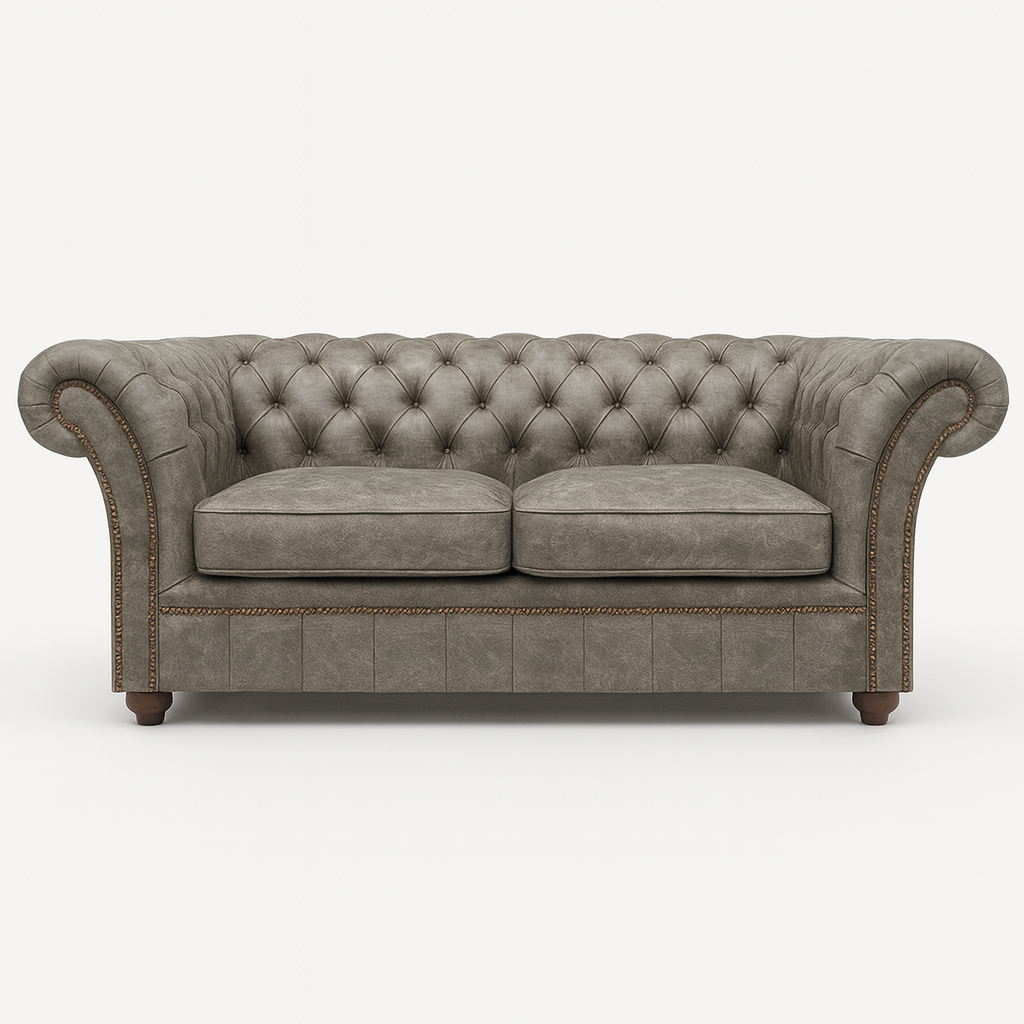
The Grosvenor Duke Sofa in Thames Fog Ash Grey – Cracked Wax Leather is another British‑made Chesterfield using full‑grain leather with a cracked‑wax texture and a cool, misty grey tone. Descriptions emphasise its time‑worn texture and the way it pairs with charcoals and neutrals for versatile styling. These examples highlight how full‑grain leathers, when paired with thoughtful finishes, deliver both robustness and a nuanced, evolving appearance.
10. FAQs: Full-Grain vs Top-Grain and Other Leather Questions for Chesterfields
1. Is full-grain leather always better than top-grain for a Chesterfield?
No, not automatically. Full‑grain is stronger and develops more patina, but some buyers prefer the more uniform look and softer feel of top‑grain. The “better” choice depends on how you use the sofa and how much natural character you want to see.
2. Will full-grain leather feel too firm?
High‑quality full‑grain often feels more structured at first, particularly on well‑sprung British Chesterfields, but it softens with use. The core comfort is also governed by the suspension and cushions, not just the leather.
3. What is the best leather for a Chesterfield if I have pets?
We usually recommend robust full‑grain or semi‑aniline top‑grain with a protective finish. Finishes like cracked‑wax can disguise light claw marks by folding them into the natural patina.
4. Is corrected-grain leather “fake” leather?
No. Corrected‑grain is still real leather, but its surface has been heavily processed. It is less prestigious than full‑ or top‑grain and has a more manufactured look, but it remains a genuine leather product.
5. How can I tell if a sofa is bonded leather?
Look for the term “bonded leather”, “reconstituted leather”, or unusually low pricing for a “leather” Chesterfield. The surface often feels more like coated plastic, and fine grain patterns may repeat in a way that looks printed.
6. What does “aniline” vs “semi-aniline” leather mean on a Chesterfield?
Aniline leather is dyed through with minimal surface coating, retaining maximum natural variation and softness but requiring more care. Semi‑aniline adds a light protective topcoat, improving stain resistance while keeping much of the natural feel.
7. How should I care for full-grain or top-grain leather?
Most makers advise regular dusting, prompt blotting of spills, and occasional conditioning with a product suitable for that finish. Always follow the care guidance provided by your retailer; different finishes need slightly different routines.
8. Why do some British leather Chesterfields cost more than others?
Costs reflect leather grade, hide origin, frame construction, labour (especially British hand‑crafting), and finishes. A full‑grain, British‑made Chesterfield with a hardwood frame and deep hand‑buttoning, like those in the Luxury Furniture Collection range, will understandably sit at a higher price point than mass‑produced or bonded‑leather alternatives.
9. Are British-made leather Chesterfields worth the premium?
For many clients, yes. You are paying for local craftsmanship, better materials, and serviceability over time. When the frame and leather are both high quality, re‑upholstery decades later is also a viable option.
10. Can I mix fabric and leather Chesterfields in one room?
Absolutely. Many interiors pair a full‑grain leather Chesterfield with fabric armchairs or a velvet sofa. The key is to balance colour and texture so the leather’s patina sits comfortably within the scheme.
Conclusion
Selecting between full‑grain, top‑grain, corrected‑grain and bonded leather for a Chesterfield sofa is ultimately about aligning material reality with how you live. Full‑grain offers the strongest structure and most rewarding patina; top‑grain balances softness with durability; corrected‑grain prioritises uniformity and practicality; bonded leather trades long‑term resilience for initial cost savings. If you remember one thing, let it be this: always look past “genuine leather” and ask for the specific grain and finish, plus a care guide. When you have that clarity, you can choose a British leather Chesterfield sofa — whether in Balmoral Mulberry, Caledonian Espresso, Thames Fog, or Highland Grove — that will genuinely serve you for years.
Luxury Furniture Collection curates British‑made Chesterfield sofas in premium full‑grain and top‑grain leathers, handcrafted by artisans with decades of experience. The focus is on honest materials, robust hardwood frames, and finishes designed to age gracefully in real homes. Explore the full range at luxuryfurniturecollection.com.
If you are ready to compare colours, leathers, and silhouettes, we invite you to browse the current selection of leather Chesterfield sofas at Luxury Furniture Collection.