British Leather Chesterfield Sofas: How to Spot Quality Craftsmanship Before You Spend £2,495+
For many of us, a British leather Chesterfield sofa is a once-in-a-decade purchase. That matters when 29% of Brits replace their sofa every five years and 51% every ten years – you want yours to sit firmly in the “keeps going” camp, not the “sags and creaks” category. In this guide, we walk through Chesterfield sofa construction from the inside out, using our experience at Luxury Furniture Collection and real examples from British-made designs such as the Windsor Belgrave and Grosvenor Duke, so you can judge comfort and longevity before you buy.
Key Takeaways
| Question | Clear Answer & Buying Insight |
|---|---|
| 1. What defines quality Chesterfield sofa construction? | A solid hardwood frame, robust joinerysuspension (usually serpentine springs), supportive cushion fillings, and full‑grain leather upholstery. British leather Chesterfields in our Leather Chesterfield collection are built around these principles. |
| 2. Why does a Chesterfield sofa frame hardwood matter? | A chesterfield sofa frame hardwood (such as beech or similar) resists warping and creaking and supports deep buttoning. Many British-made models, including the Windsor Belgrave at £2,495.00, are built on solid hardwood frames for this reason. |
| 3. Serpentine springs vs webbing: which is better? | Sofa suspension serpentine springs vs webbing is a key decision: serpentine (no-sag) springs generally offer firmer, longer-lasting support than webbing alone. Many premium British Chesterfields combine springs with webbing for balanced comfort. |
| 4. Cushion filling foam vs feather – what’s right for me? | In the cushion filling foam vs feather debate, foam (often with fibre wrap) keeps its shape and needs less maintenance; feather and feather-blend cushions give a sink‑in feel but require daily plumping and more care. |
| 5. How do I judge leather quality on a Chesterfield? | Look for full‑grain or top‑grain leather descriptions, traditional hand-finishing, and clear care guidance. Our dedicated British Leather Chesterfields page outlines how we specify and use premium hides. |
| 6. Are British-made leather Chesterfields worth the price? | For buyers who value craftsmanship, repairability, and 10+ years of use, a British-made leather Chesterfield in the £2,495+ range often works out cheaper per year than replacing lower-cost sofas more frequently. |
| 7. What should I ask a retailer before ordering? | Ask for frame wood species, joinery type, suspension system, cushion fillings, and leather grade. Our team at Luxury Furniture Collection provides this detail as standard on British leather Chesterfield sofas. |
1. Understanding Chesterfield Sofa Construction: Why the Inside Matters
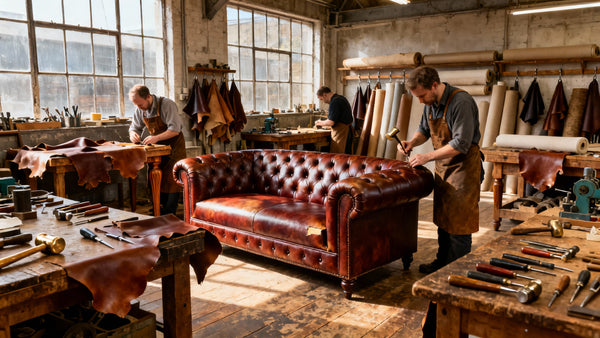
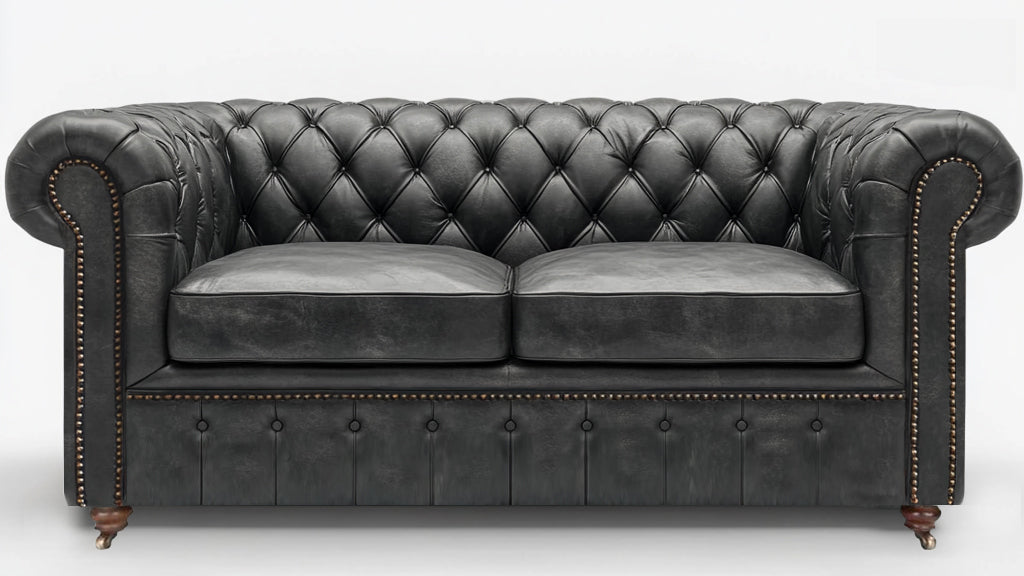
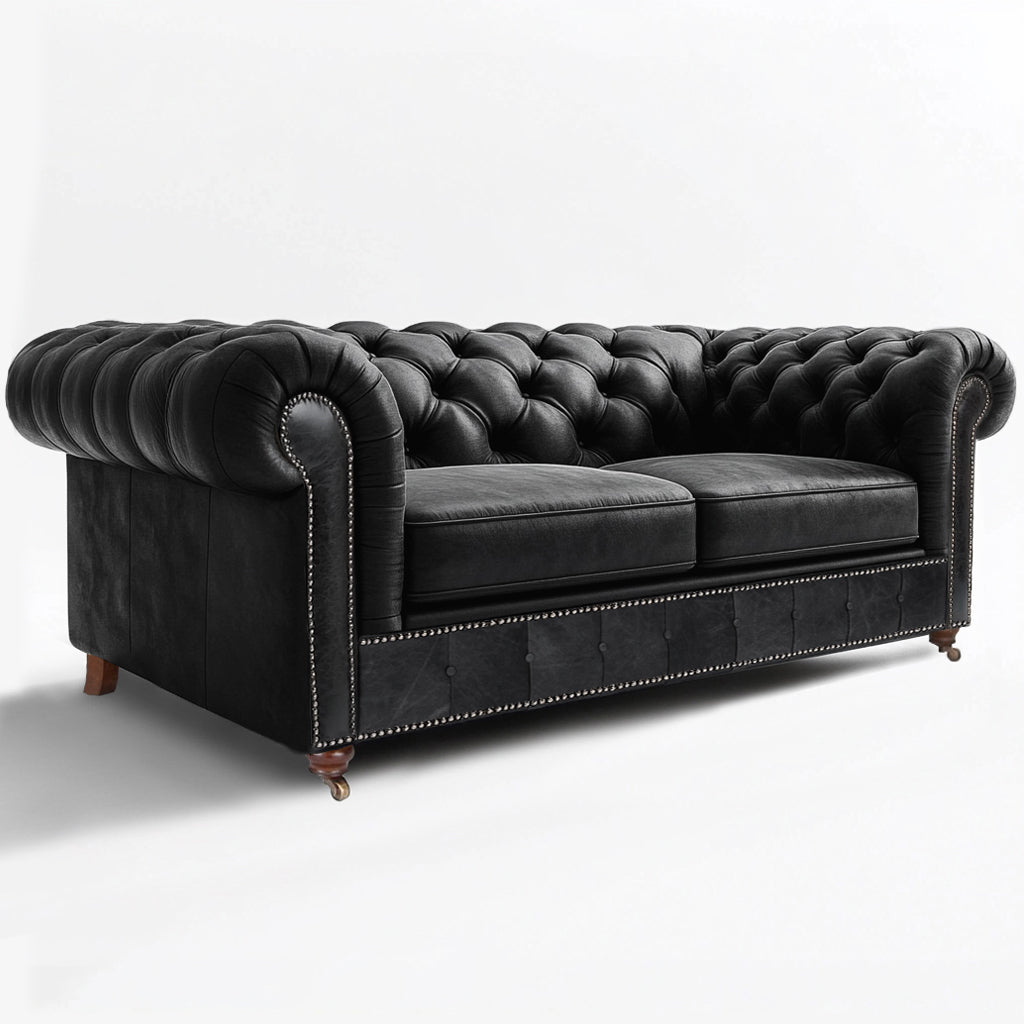
When you first see a British leather Chesterfield, you notice the deep buttoning, rolled arms, and rich patina. Construction details – frame, joinery, suspension, fillings, and leather – sit quietly underneath, but they decide whether the sofa still feels supportive and looks composed ten years from now. Our British-made designs, such as the Windsor Belgrave British Made Chesterfield Heritage Patina Pewter at £2,495.00 and the Grosvenor Duke British Made Chesterfield (from £2,495.00), follow a traditional construction approach. Below, we break down the main elements and the key trade-offs that affect comfort, maintenance, and service life.
2. The Frame: Why a Chesterfield Sofa Frame Hardwood Is Non‑Negotiable
The frame is the skeleton of a British leather Chesterfield sofa. It carries the weight of deep buttoning, rolled arms, and dense fillings, so we always look for a chesterfield sofa frame hardwood rather than softwood or composite board. Many British-made Chesterfields, including the Grosvenor Duke British Made Chesterfield Heritage Patina Pewter (from £2,495.00), specify solid hardwood frames with long guarantees (often 25 years on the frame). Hardwood handles tension from serpentine springs and frequent seating without twisting or loosening over time.
What to look for in a quality frame
- Material: Solid kiln‑dried hardwood (such as beech or similar), not chipboard or low‑grade plywood.
- Bracing: Corner blocks and cross‑bracing to resist racking and wobble.
- Guarantee: Many high‑end British makers offer long frame guarantees – a useful proxy for confidence in construction.
Trade‑off wise, hardwood frames cost more and add weight, but they significantly extend the service life of the sofa. In our view, on a Chesterfield this is not the place to compromise.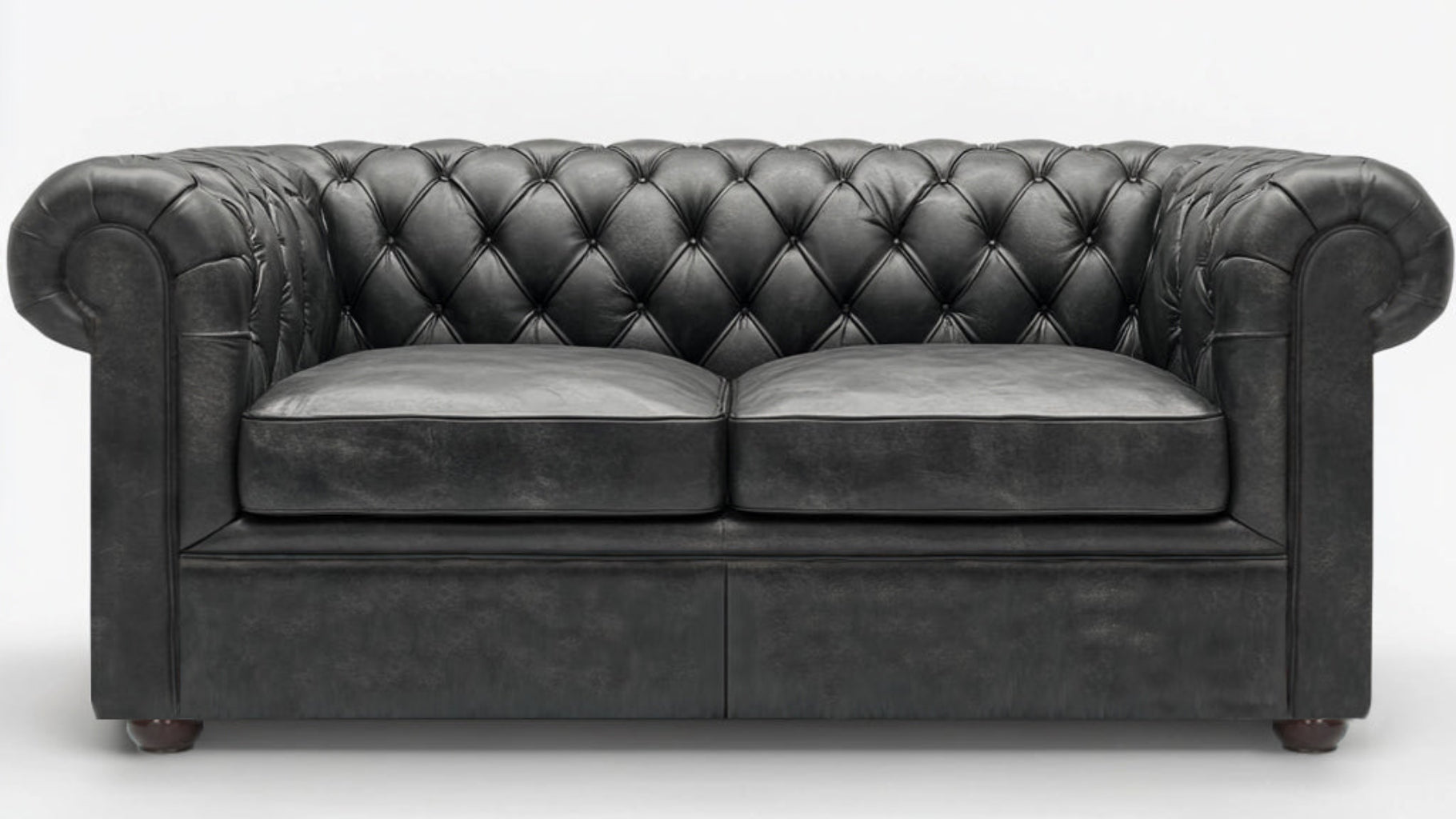
3. Joinery: How the Frame Is Held Together
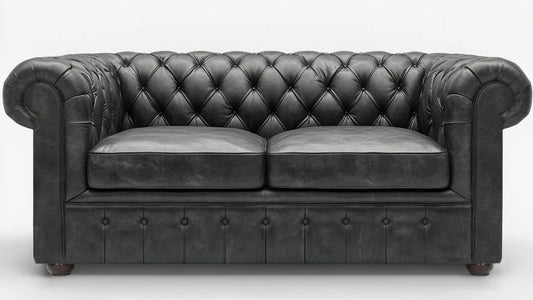
Even the best hardwood fails if the joints are weak. Joinery governs how well a Chesterfield resists years of movement, especially along arm and back sections that carry the tension of deep buttoning. In British leather Chesterfield sofas such as the Cambridge British Made Chesterfield Heritage Pewter (from £2,495.00), traditional upholstery workshops often use a mix of glued, screwed, and blocked joints. While the exact methods vary by maker, you should always expect more than simple nail‑gun assembly.
Preferred joinery methods
- Mortise-and-tenon or dowelled joints on main frame rails and arms.
- Double‑dowelling and corner blocks in high‑stress angles.
- Glue and screws rather than staples alone.
When retailers describe joinery in detail and offer a long frame guarantee (as many British makers do), it’s a strong sign that the sofa is built for decades rather than seasons.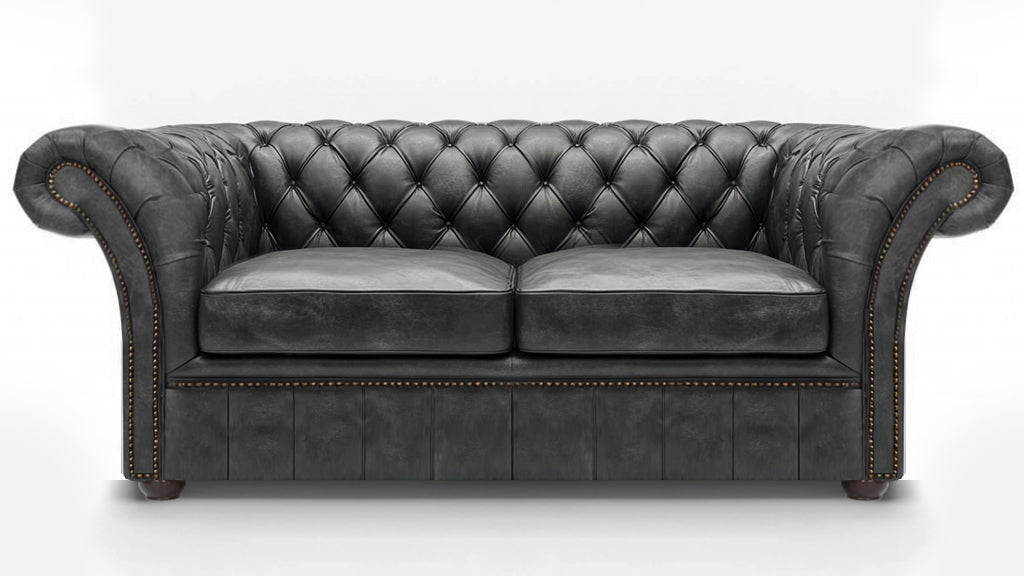
4. Suspension Systems: Serpentine Springs vs Webbing on Chesterfields
Suspension is the hidden layer between the frame and the cushions. It shapes how the sofa feels immediately and how it wears under daily use. In a chesterfield comfort guide, we always discuss sofa suspension serpentine springs vs webbing because the difference is significant.
Serpentine (no‑sag) springs
Serpentine springs are S‑shaped steel springs running front to back across the seat and sometimes in the back as well.
- Pros: Even support, good resilience, better long‑term shape retention.
- Cons: Higher material and labour cost than webbing alone.
- Best for: Buyers who prefer a supportive seat that doesn’t collapse over time.
Webbing-only systems
Webbing uses tensioned elastic or jute straps across the frame.
- Pros: Lower cost, can feel slightly softer at first.
- Cons: Can stretch and sag sooner if not combined with springs.
- Best for: Occasional‑use rooms where ultimate longevity is less critical.
Most premium British Chesterfields combine serpentine springs with webbing or hessian to stabilise the support. When comparing sofas, ask how the seat base is constructed rather than assuming all Chesterfields are equal.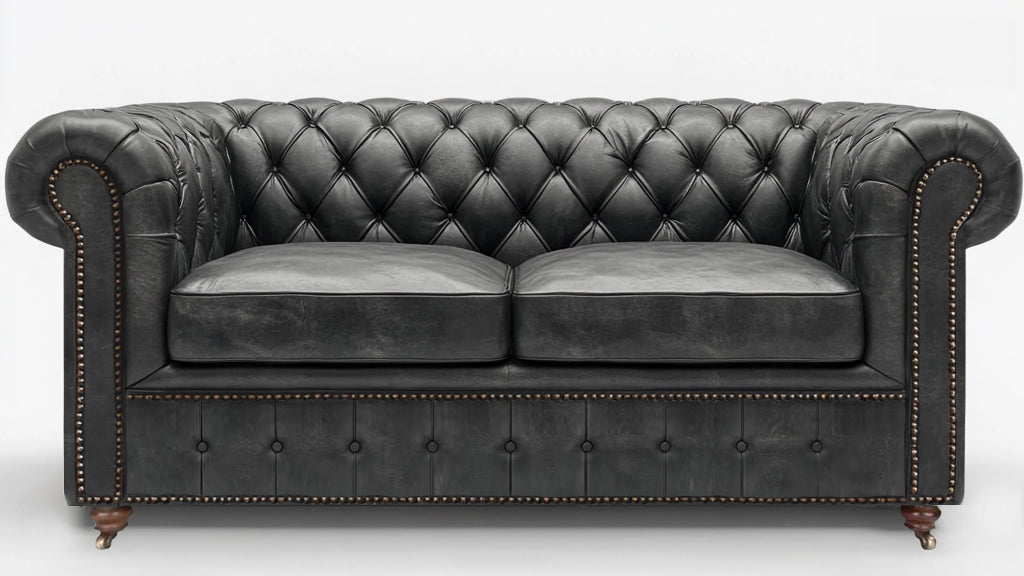
5. Cushioning & Fillings: Cushion Filling Foam vs Feather Trade‑offs
The cushion core determines whether a Chesterfield feels firm, medium, or sink‑in – and how much maintenance you accept. This is where the cushion filling foam vs feather decision comes into play.
Foam (often with fibre wrap)
- Pros: Keeps its shape, offers clear support, low daily maintenance.
- Cons: Can feel firmer; lower‑grade foam may compress if not specified properly.
- Best for: Formal living spaces, households wanting a “ready to sit” look with minimal plumping.
Feather or feather‑blend cushions
- Pros: Luxurious, sink‑in comfort that many associate with heritage Chesterfields.
- Cons: Requires regular plumping; feathers can migrate and compact.
- Best for: Relaxed spaces where informal, lived‑in comfort is a priority.
Many British leather Chesterfields, including designs like the Mayfair Regent British Made Chesterfield Heritage Patina Pewter (from £2,495.00), are specified with high‑resilience foam seats and supportive backs to balance comfort with shape retention. When you speak with a retailer, ask them to explain their filling specification in detail.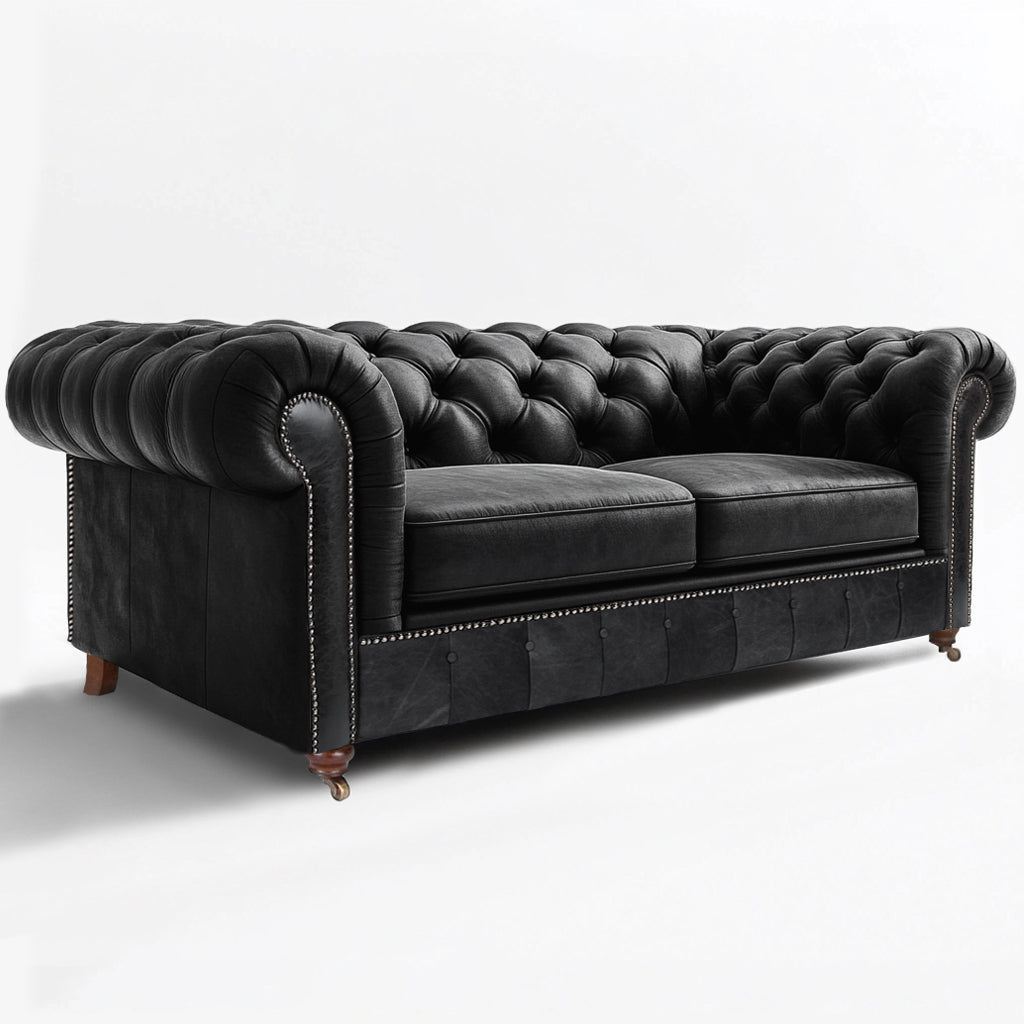
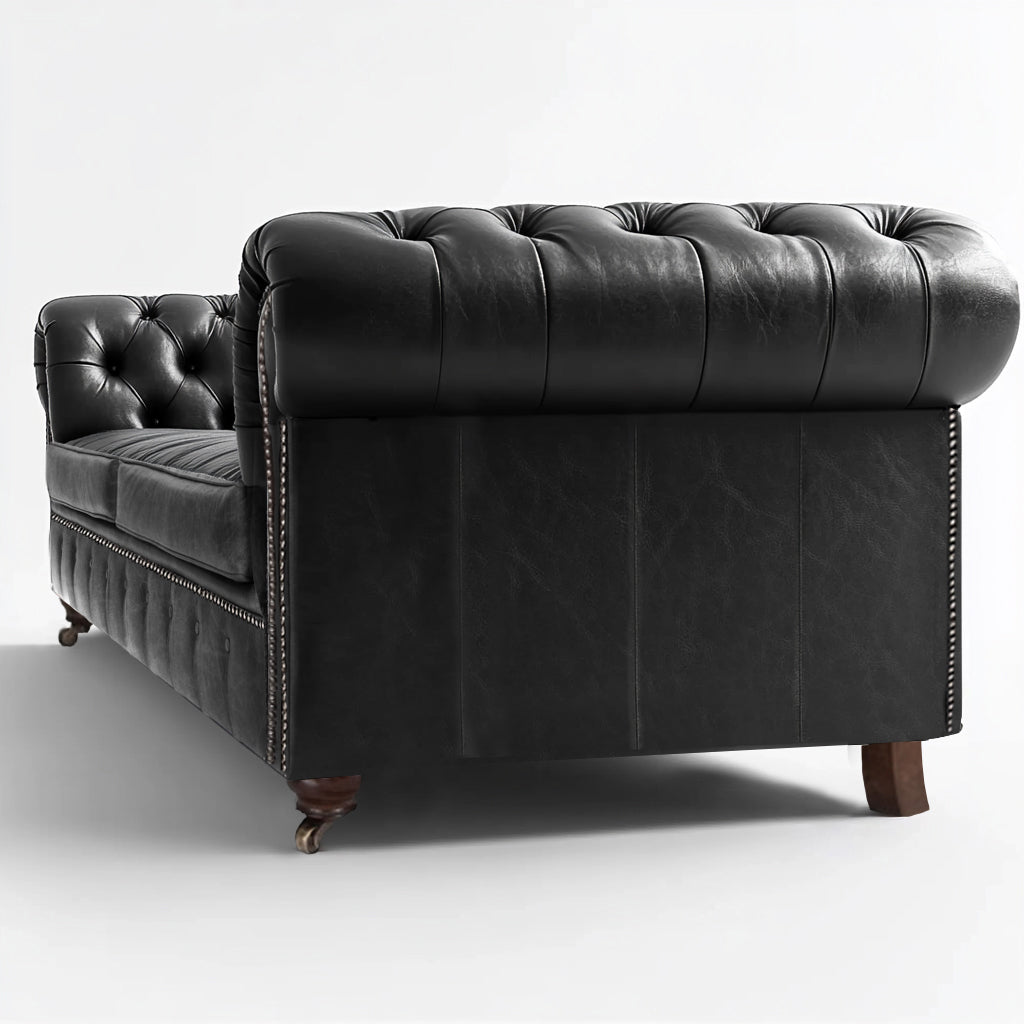
6. Upholstery & Leather: Full‑Grain, Patina, and Practical Care
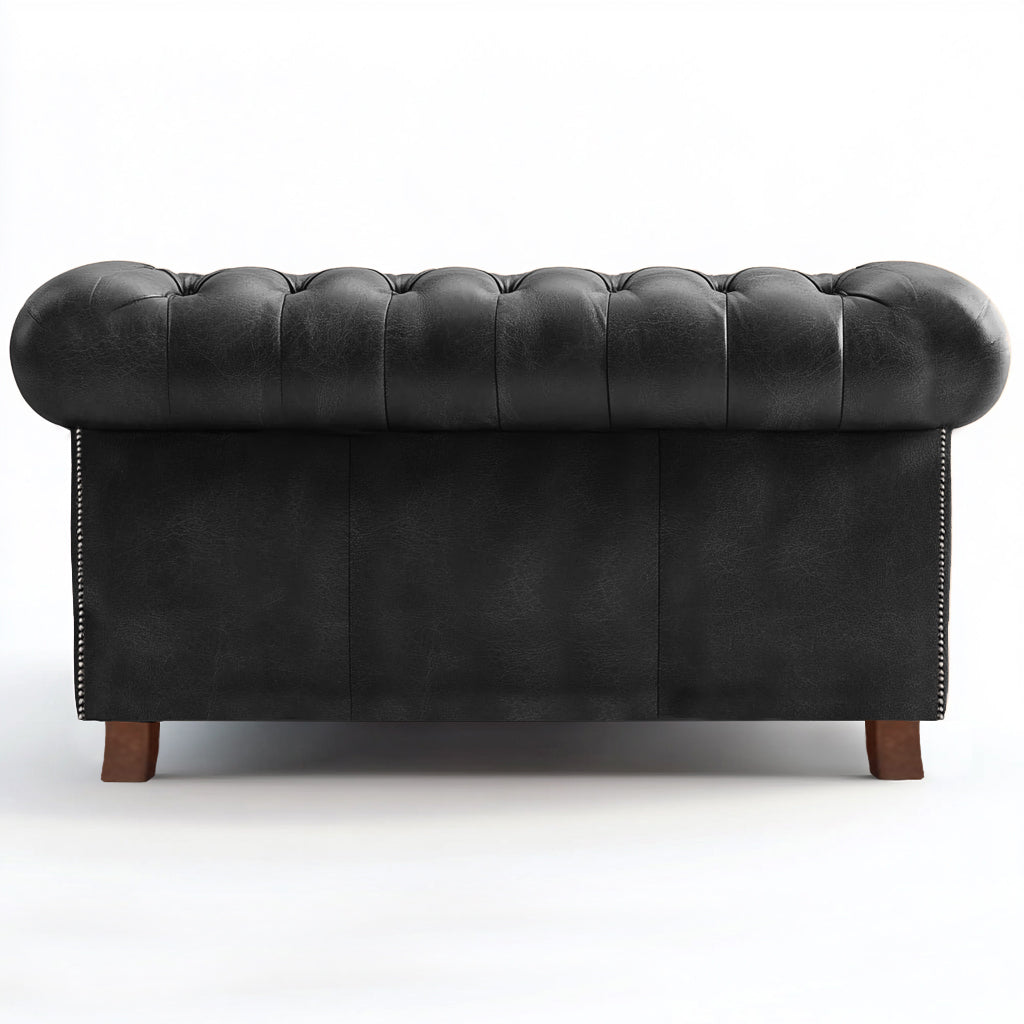
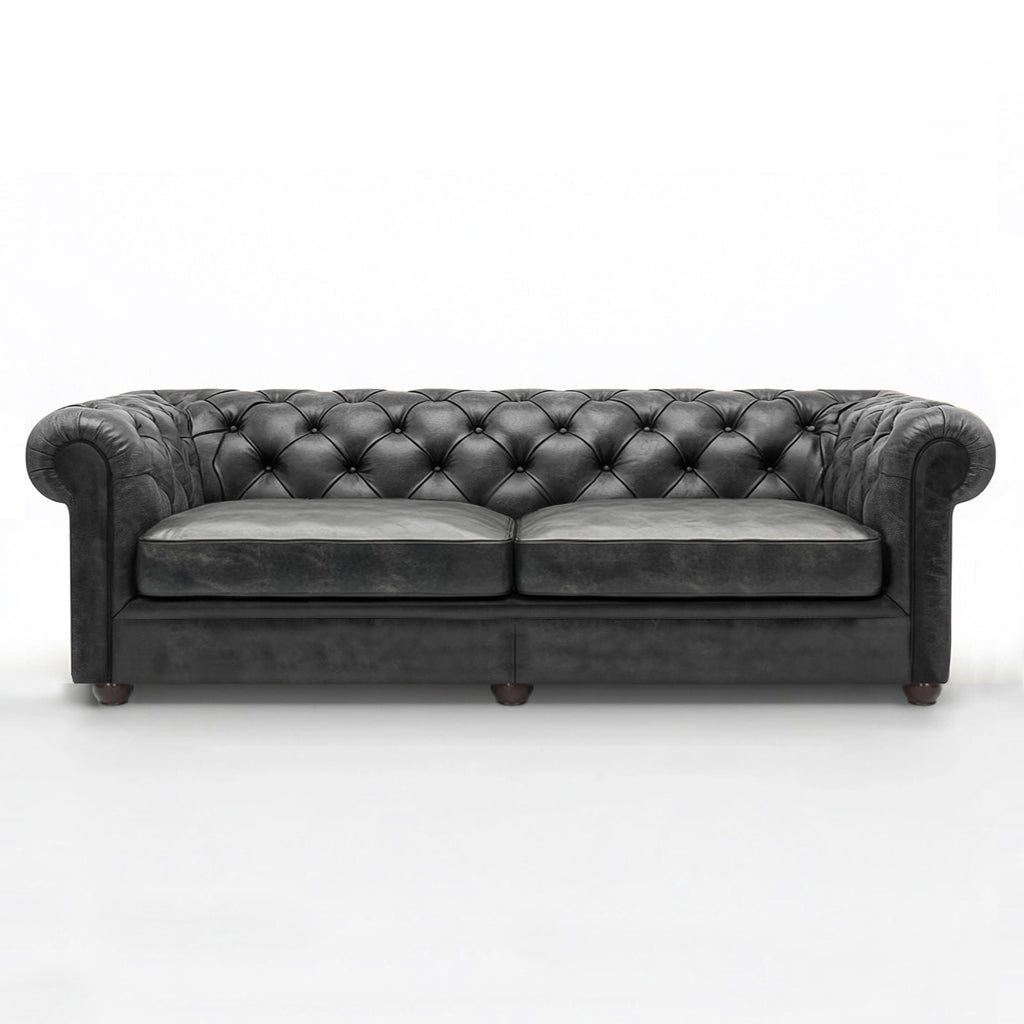
Leather choice is central to both appearance and durability on British Chesterfield sofas. Our collection focuses on full‑grain and premium top‑grain leathers, hand‑finished to develop character over time rather than simply wearing out. The Windsor Belgrave British Made Chesterfield Heritage Patina Pewter uses a cracked wax leather with a heritage patina finish. This type of leather offers a distinguished, slightly burnished surface that highlights the classic silhouette without sacrificing strength.
Key leather considerations
- Grain: Full‑grain or top‑grain leathers are more durable than split or bonded leathers.
- Finish: Heritage patina and wax finishes enrich colour and age gracefully; more heavily coated leathers can be easier to wipe but less characterful.
- Care: Many retailers include leather care guidance; expect to dust regularly and condition occasionally with a recommended product.
Italian leather Chesterfields, such as our Italian real leather designs in Sorrel Brown and Roseate Red, show how different leather types and colours alter the look while still relying on robust construction underneath.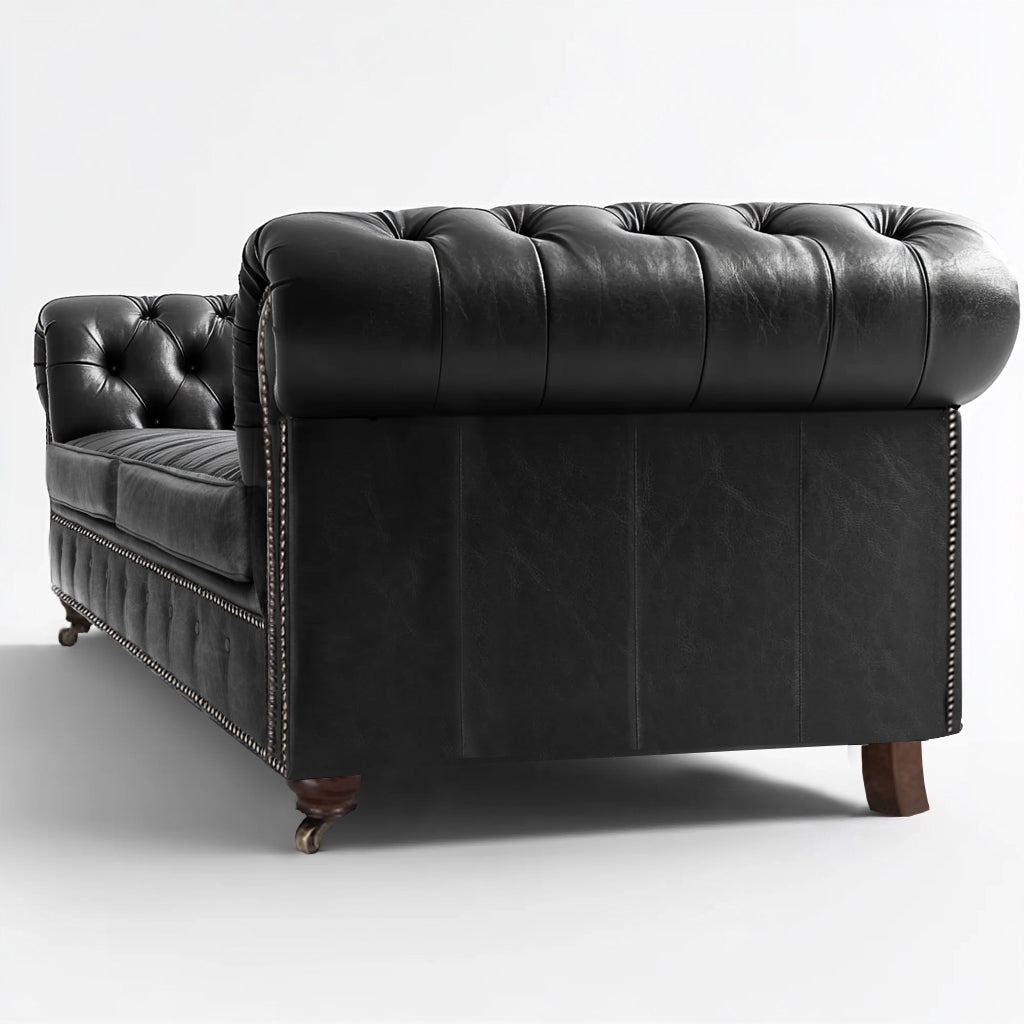
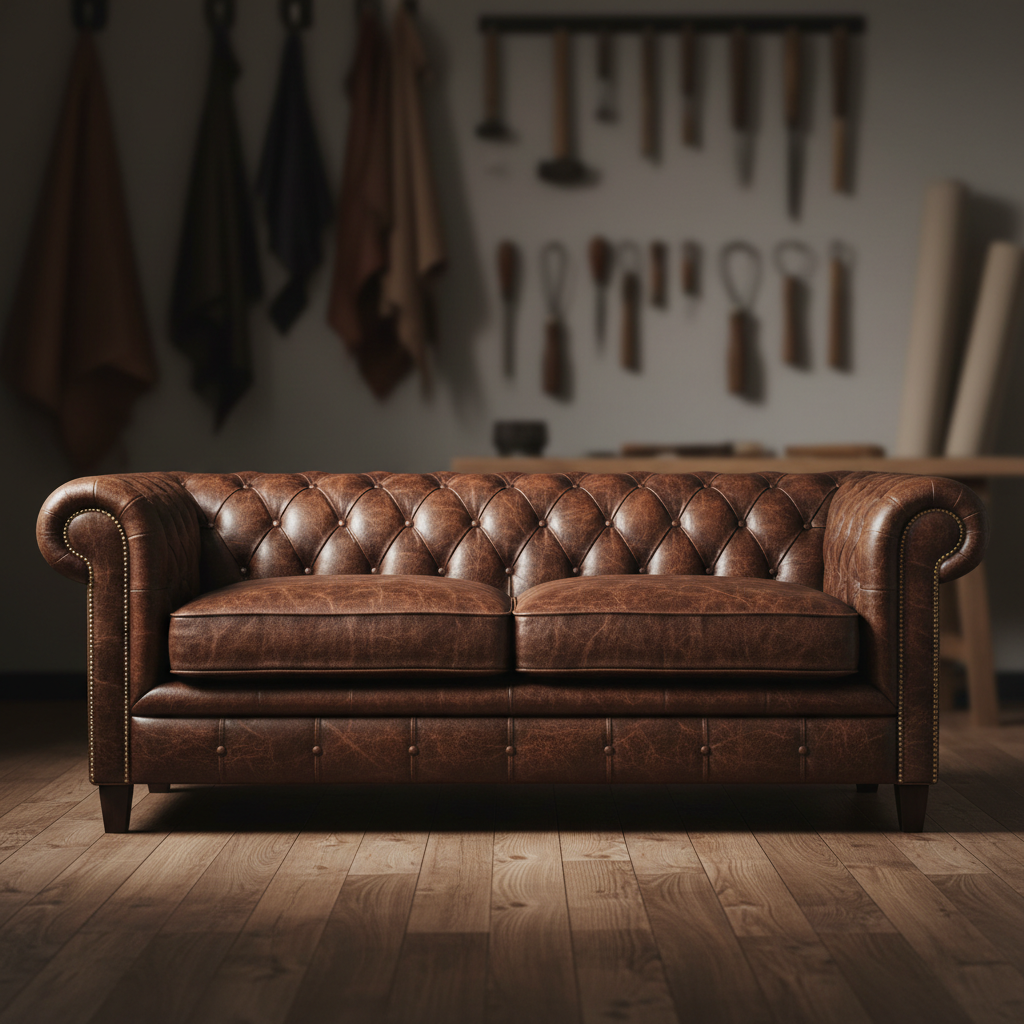
7. Detailing: Buttons, Studs, and the Signature Chesterfield Look
Beyond structure and leather, the detailing defines the character of a British leather Chesterfield. Deep button tufting, hand‑applied studs, and rolled arms demand time and skill; they also rely on a stable frame and consistent padding.
Buttons and tufting
On quality Chesterfields like the Cambridge British Made Chesterfield and Savile Row Heritage, buttoning is typically done by hand, pulling through layers of padding and securing to the frame.
- Pros (deep buttoning): Classic appearance, keeps leather taut, reduces puddling.
- Trade‑off: Slightly firmer seating surface; requires accurate construction to avoid pressure points.
Studs and trims
Studwork along the facings and arms should run in straight, consistent lines with individually applied studs or high‑quality strip studs.
- Check alignment and spacing; inconsistencies often mark rushed work.
- Ask whether studs are decorative only or also help secure the leather.
These details are not just aesthetic. They hold layers under tension and help the sofa wear evenly, provided they are set into a stable hardwood frame.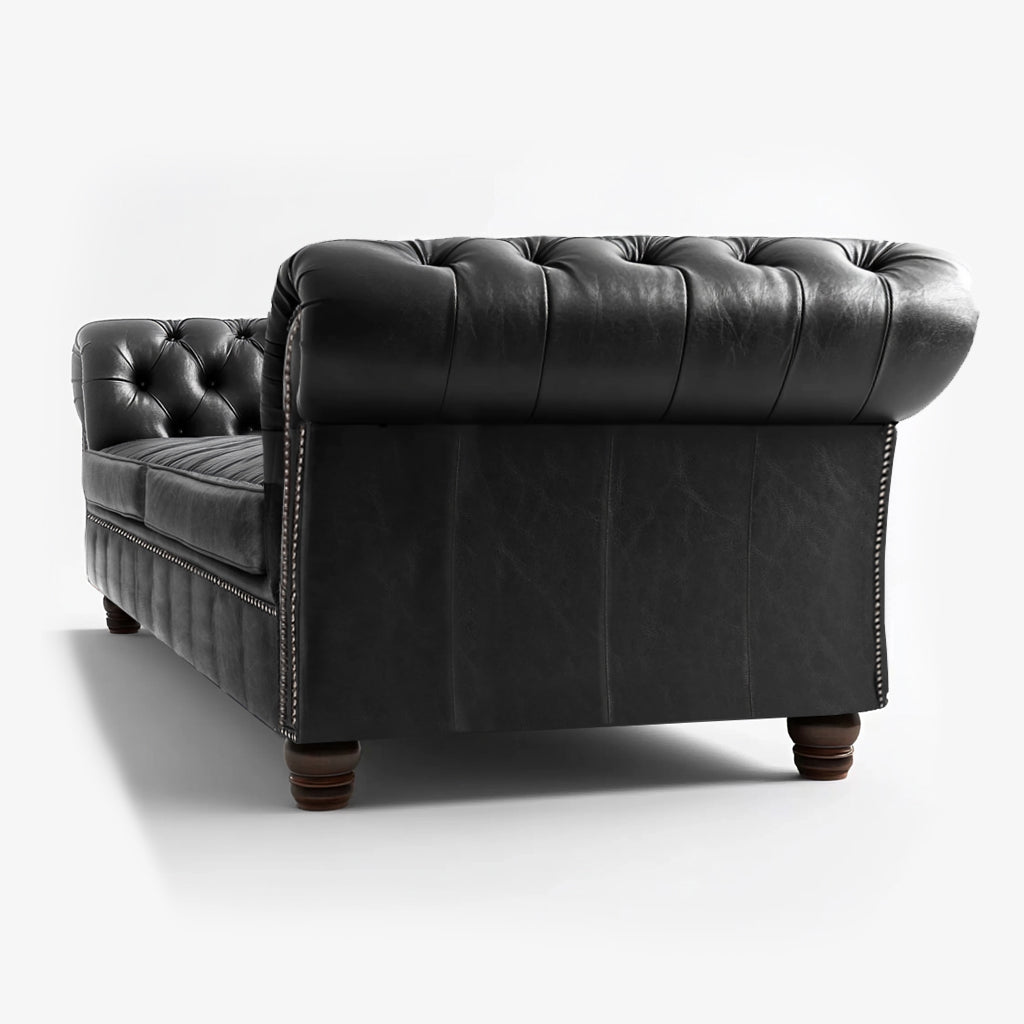
8. Comfort vs Maintenance: Finding Your Chesterfield Balance
Comfort is subjective, but construction heavily influences how it feels over years of use. In any thorough chesterfield comfort guide, we look at three balancing acts: firmness vs sink‑in, support vs softness, and character vs upkeep.
Key trade‑offs
| Factor | “Low Maintenance” Choice | “Maximum Comfort/Character” Choice |
|---|---|---|
| Seat Feel | High‑resilience foam, serpentine springs | Feather or feather‑blend cushions, softer tensioning |
| Look Over Time | More structured, retains showroom lines | Relaxed, “lived‑in” patina and creasing |
| Daily Care | Occasional vacuuming and leather care | Regular cushion plumping and more active leather care |
Premium British Chesterfields, such as the Windsor Belgrave and Mayfair Regent, aim to sit in the centre of this table: structured enough to hold their line, but comfortable enough for daily use. When in doubt, sit on both firmer and softer set‑ups in a showroom if possible, or ask for honest guidance based on how you use your living space.

9. Questions to Ask Before You Buy a British Leather Chesterfield Sofa
A British leather Chesterfield is a significant purchase, so it is worth interrogating construction details. Use this checklist when you speak with a retailer or review a product page.
Construction checklist
- Frame: What wood is used? Is it a solid hardwood frame, and is there a frame guarantee?
- Joinery: How are the main joints constructed? Are they glued, screwed, and blocked?
- Suspension: Are you using serpentine springs, webbing, or both in the seat and back?
- Cushions: What are the seat and back fillings? Foam density? Any feather or fibre blends?
- Leather: Is this full‑grain or top‑grain leather? How is it finished, and what care is recommended?
- Lead time: Is the piece made‑to‑order, and what are the indicative delivery timelines?
We encourage you to request fabric and leather swatches where offered, especially if you are choosing distinctive finishes such as cracked wax pewter. Many British workshops build to order in 8–12 weeks, which allows you to specify the size (two, three, or four seater) and finish with confidence.
10. Red Flags to Avoid When Choosing a Leather Chesterfield
Not every sofa marketed as a “Chesterfield” follows traditional British construction standards. Here are warning signs we advise you to treat with caution.
Common red flags
- Vague materials: No mention of frame wood species, cushion fillings, or leather grade.
- No construction detail: Product pages that only discuss style and colour, with no reference to springs, foam densities, or joinery.
- Over‑reliance on “PU” or “bonded” leather: These are not equivalent to full‑grain leather in feel or longevity.
- Very short frame guarantees (or none mentioned) on supposedly “heritage” pieces.
- Unrealistically low prices for complex, fully tufted Chesterfields, especially in “real leather”.
If in doubt, contact the retailer and ask direct questions. A serious maker of British leather Chesterfield sofas will be ready to explain their construction and, where relevant, invite you to read more on pages like their our story or craftsmanship sections.

11. British Leather Chesterfield Sofa Examples & Price Points
To put these construction principles into context, here are some representative British leather Chesterfield sofas from our range at Luxury Furniture Collection:
- Windsor Belgrave British Made Chesterfield Heritage Patina Pewter – £2,495.00, full‑grain cracked wax leather, British‑made, hardwood frame.
- Cambridge British Made Chesterfield Heritage Pewter – from £2,495.00, deep buttoning and rolled arms in a classic British silhouette.
- Grosvenor Duke British Made Chesterfield Heritage Patina Pewter – from £2,495.00, solid hardwood frame with traditional upholstery techniques.
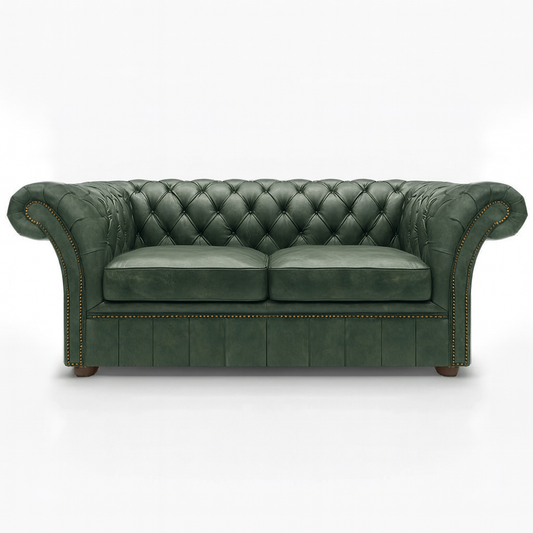
- Mayfair Regent British Made Chesterfield Heritage Patina Pewter – from £2,495.00, refined lines with premium hand‑finished leather.
- Savile Row Heritage British Made Chesterfield Pewter – from £2,495.00, distinguished, tailored profile with traditional buttoning.
Many of these designs are made to order in Britain with indicative lead times of around 8–12 weeks. We recommend confirming current delivery windows and any frame guarantees directly with your retailer at the point of purchase.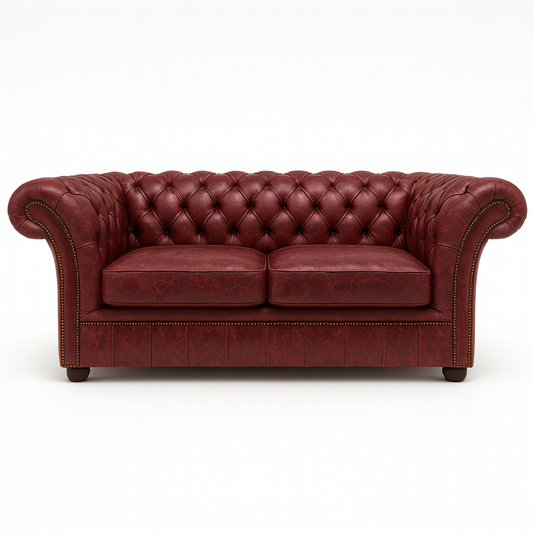
FAQ: British Leather Chesterfield Sofa Construction & Comfort
1. What makes a Chesterfield sofa “British” in construction terms?
Typically, British construction refers to sofas made in Britain using traditional upholstery techniques: hardwood frames, hand‑tied or serpentine spring systems, deep buttoning, and skilled leather cutting and sewing. It is less about style labels and more about where and how the sofa is built.
2. Is a hardwood frame really necessary on a Chesterfield?
For deep‑buttoned, leather Chesterfields, a hardwood frame is extremely important. Softwoods or engineered boards are more prone to warping and can loosen under the tension of buttoning and springs, shortening the life of the sofa.
3. Which is better: serpentine springs or webbing?
For an everyday family sofa, serpentine springs (often combined with webbing) usually offer better long‑term support and shape retention than webbing alone. Webbing‑only seats can feel softer initially but may sag sooner, especially under frequent use.
4. Are foam cushions uncomfortable compared to feather?
Not if they are specified correctly. High‑resilience foam cushions with a fibre wrap can feel supportive and comfortable without the heavy plumping that feather cushions demand. Feather or feather‑blend cushions give a more sink‑in feel but need more daily care.
5. Do deep buttons make a Chesterfield less comfortable?
Quality construction spreads the tension from deep buttoning evenly, so you should not feel individual buttons pressing through. If the padding and suspension are well executed, a deep‑buttoned Chesterfield can be very comfortable while retaining its signature look.
6. How long should a British leather Chesterfield sofa last?
With a solid hardwood frame, robust suspension, quality leather, and basic care, many owners comfortably use British leather Chesterfields for 10–20 years or more. Much depends on daily wear, maintenance, and whether you chose a style that you still enjoy over time.
7. Is full‑grain leather worth the extra cost?
For most buyers seeking longevity and character, yes. Full‑grain leather is tougher, ages more gracefully, and can be cleaned and conditioned effectively. Lower‑cost alternatives can crack, peel, or wear through faster.
8. How can I tell if a Chesterfield is properly constructed without seeing inside?
Read the specification carefully and ask direct questions about frame wood, springs, fillings, and leather grade. Reputable makers provide this information openly, as we do at Luxury Furniture Collection on our British leather Chesterfield range.
9. Are British-made Chesterfields difficult to maintain?
Maintenance is straightforward: regular dusting, prompt cleaning of spills, occasional leather conditioning, and (if applicable) cushion plumping. Compared with fabric sofas, leather Chesterfields are often easier to wipe clean, especially in busy households.
10. Why do many British leather Chesterfields cost around £2,495 and up?
The price reflects materials (hardwood, full‑grain leather, quality foam), labour (skilled upholsterers and buttoning), and made‑to‑order production in Britain. Spread over 10–15 years of use, the cost per year is typically lower than repeatedly replacing cheaper sofas.
11. Do British leather Chesterfields suit modern interiors?
Yes. Many current designs, including pewter and ash grey finishes, are styled to work in both traditional and contemporary rooms. The profile remains classic, but colour and leather selection can make the sofa feel more modern or more heritage.
12. How do I choose the right size: two, three, or four seater?
Measure your room carefully, including doorways and stairwells. A two‑seater suits compact spaces or bay windows, a three‑seater works well as the main family sofa, and a four‑seater suits larger living rooms. Many British makers offer each model in multiple lengths, so you can match the footprint to your layout.
About Luxury Furniture Collection
Luxury Furniture Collection curates British-made leather Chesterfield sofas that prioritise construction quality, comfort, and timeless design. Our pieces are handcrafted in Britain using traditional upholstery techniques, premium leathers, and carefully specified frames and fillings. Learn more about our approach and collection at Luxury Furniture Collection.
Conclusion
A British leather Chesterfield sofa is more than a style choice. Frame hardwood, joinery, suspension, cushion fillings, leather quality, and detailing all determine how comfortable the sofa feels and how well it stands up to a decade or more of use. If you ask precise questions about chesterfield sofa construction – including chesterfield sofa frame hardwood, sofa suspension serpentine springs vs webbing, and cushion filling foam vs feather – you will quickly separate genuinely well‑built British leather Chesterfields from those trading only on looks. When you are ready to compare real models, we invite you to browse our curated range of leather Chesterfield sofas at Luxury Furniture Collection.